Medically reviewed by Dr. Prem Ratan Degawat, MD, DM (Cardiology)
Senior Interventional Cardiologist · Director, Mitral & Tricuspid Valve Therapy · Associate Director, TAVR & Structural Heart Disease Program, Eternal Hospital, Jaipur
Last updated on Sep 18, 2026 · View LinkedIn profile
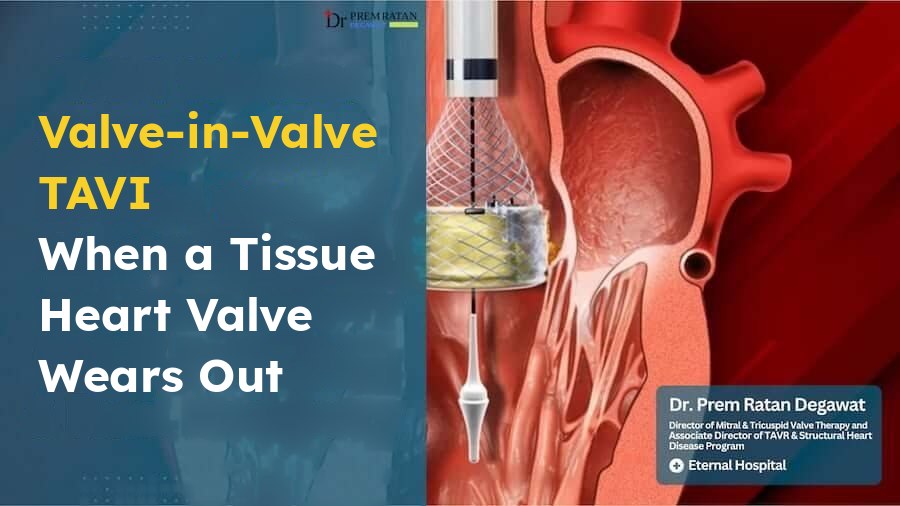
Valve-in-valve TAVI can treat a failing surgical tissue aortic valve by placing a new valve inside it, usually through an artery in the groin. It can avoid another open-heart operation in suitable patients. Whether it is right for you depends on why the old valve is failing, its internal size and the surrounding anatomy.
The old operation does not automatically rule you in or out. The first task is to identify exactly which valve you have.
| Your situation | What it means for valve-in-valve TAVI |
|---|---|
| A surgical tissue aortic valve has narrowed or leaks through its leaflets | Valve-in-valve may be an option after assessment |
| You have a mechanical valve | Standard valve-in-valve TAVI is not suitable |
| The old tissue valve is very small | The team must check whether another valve would leave too much obstruction |
| There is active valve infection | Placing another valve inside is not the usual treatment |
| You already have a TAVI valve | Repeat TAVI needs a separate assessment of the existing frame and coronary access |
What does it mean when a tissue valve wears out?
A tissue valve, also called a bioprosthetic valve, uses biological leaflets to control blood flow. Over time, those leaflets can become stiff with calcium or develop tears. A stiff valve may not open properly. A torn one may allow blood to leak backwards.
This deterioration is different from a blood clot on the valve or an infection called endocarditis. Leakage around the outside of a valve is another separate problem. The treatment may therefore be different even when two echo reports both say “prosthetic valve dysfunction.”
Prandi and colleagues’ review of valve-in-valve planning stresses identifying the cause before choosing a procedure. A new valve should not be the automatic response to every abnormal scan.
If the terminology is unfamiliar, our explanation of what TAVI involves covers the basic catheter procedure. Here, the extra challenge is fitting it safely inside an existing valve.
Which symptoms need a review?
You may notice breathlessness on a walk that used to be easy, or find that everyday activity leaves you unusually tired. Ankle swelling, chest discomfort or fainting can also need assessment. These symptoms have several possible causes, so they do not prove that the valve has failed.
Bring a change in symptoms to your cardiologist even if your routine echo appointment is months away. Comparing the current scan with earlier scans helps show what has changed.
Severe breathlessness at rest, ongoing chest pain or a collapse needs emergency medical assessment. Fever or chills in someone with a replacement heart valve also deserves prompt medical attention. Do not wait for a routine consultation when you are acutely unwell.
Who may be suitable for valve-in-valve TAVI?
The strongest reason to consider it is a significantly failing tissue aortic valve in someone for whom repeat surgery carries substantial risk. Previous chest surgery can make another operation more complex. Other illnesses and frailty also affect the balance.
But a difficult operation does not automatically make a catheter procedure safe. The new valve still needs room to open, and blood must continue to reach the coronary arteries that supply the heart muscle.
The Heart Team should compare both approaches. This includes an interventional cardiologist and a cardiac surgeon, with imaging specialists contributing to the plan. Our TAVI eligibility guide explains the general assessment; a previous tissue valve adds another layer of anatomical checks.
Surgery may be better if the original valve is too small, coronary obstruction cannot be prevented safely, or another heart problem also needs an operation. Active infection is a particular reason to consider a different treatment pathway. Younger patients need a longer view of future valve procedures as well.
What must the scans and old operation records show?
The label on your valve card is useful, but it is not enough by itself. Three questions deserve clear answers before consent.
How much room is actually inside the old valve?
The team needs the original valve’s model and size, then assesses its usable internal opening. The labelled size is not necessarily the space available for the new valve.
Putting a valve inside a small opening can leave a high pressure gradient, meaning the heart still has to push hard to move blood through it. If the effective opening is too small for your body’s needs, doctors call this prosthesis-patient mismatch. The old valve can be technically treated while the result remains less helpful than hoped.
Could the old leaflets block a coronary artery?
As the new valve expands, it pushes the old leaflets outwards. In some anatomies, these leaflets can obstruct a coronary opening. CT planning examines the coronary positions and the space around the old valve, including where a proposed new valve would sit.
Prandi and colleagues describe why this planning matters. A specialised protective technique may be possible in selected cases, but it does not remove every risk. Some patients are better served by surgery.
Will the result preserve future treatment options?
The team also considers access to the coronary arteries after implantation and what another valve procedure might involve later. This matters especially when life expectancy is long. “We can keep adding valves” is not a sound lifetime plan.
Kidney function and the arteries used to deliver the valve also need assessment. Tell the team about previous contrast reactions and bring existing scan images, not just written reports.
How does it compare with another open operation?
Valve-in-valve TAVI usually avoids reopening the chest and a new breastbone wound. Repeat surgery removes the old prosthesis and may allow the surgeon to address a small opening or other problems at the same operation. Each approach solves a different set of constraints.
A 2022 meta-analysis by Raschpichler and colleagues combined 15 nonrandomised studies involving 8,881 patients. Valve-in-valve was associated with lower short-term mortality and less acute kidney failure. However, severe prosthesis-patient mismatch was more frequent and the remaining pressure gradients were higher. Midterm mortality did not differ significantly.
These were not randomised comparisons. Differences between the patients selected for each treatment could affect the findings. They do not establish that TAVI is safer for every individual.
For broader recovery differences, see our comparison of TAVI and open-heart surgery. Your own decision needs the specific risks of a repeat operation and the CT findings together.
What happens during the procedure and recovery?
The replacement valve is carried on a catheter, most often through a groin artery. Imaging guides it into the old tissue valve, where it is expanded. The old surgical valve remains in place. The team then checks blood flow and looks for leakage or coronary problems.
Avoiding a chest incision does not make this a minor procedure. Risks include bleeding or artery damage, stroke, kidney injury and valve leakage. Some patients need a pacemaker. Coronary obstruction and death are also possible and belong in the consent discussion.
Afterwards, monitoring checks heart rhythm and the groin access site. An echo assesses the new valve. Discharge depends on recovery and any complications, rather than a promised number of nights. Our day-by-day TAVI admission guide explains the hospital routine, although a repeat-valve case may need a different stay.
Leave with a written medicine plan and follow-up dates. Blood-thinning treatment depends on your other conditions as well as the procedure. Do not start, stop or change it yourself. Ongoing valve surveillance and attention to dental health remain part of care.
What should you bring to a Jaipur consultation?
Bring the old operation note and valve card if available. Add your latest echo with images, earlier echo reports for comparison, and a current medicine list. Include records of any bypass operation or coronary stents.
Dr. Degawat’s second-opinion assessment includes an independent review of prior findings. For a failed tissue valve, the discussion should explain the cause of failure, the predicted result with each treatment and the reason for the recommendation.
Valve-in-valve TAVI offers another route for some families facing repeat surgery. The useful next step is an assessment of the existing valve, not a promise based on age or a single report. Arrange a TAVI consultation with Dr. Prem Ratan Degawat in Jaipur to review those options.
About Dr. Prem Ratan Degawat
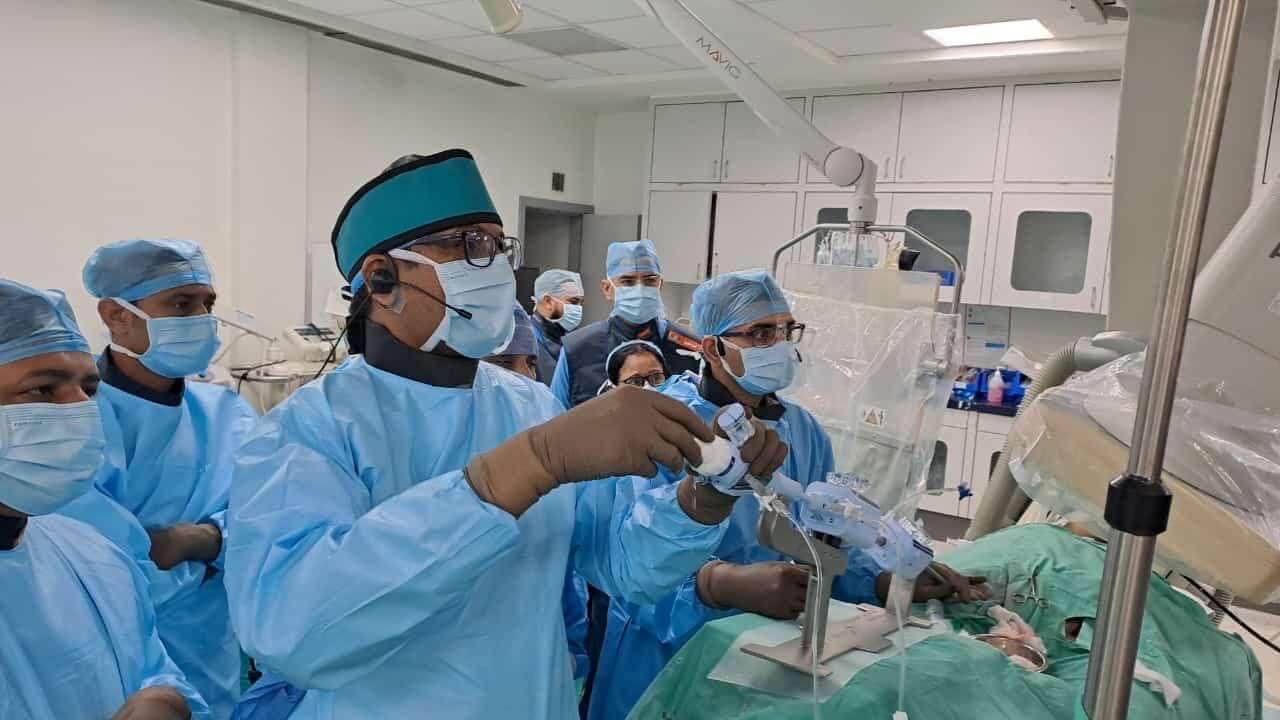
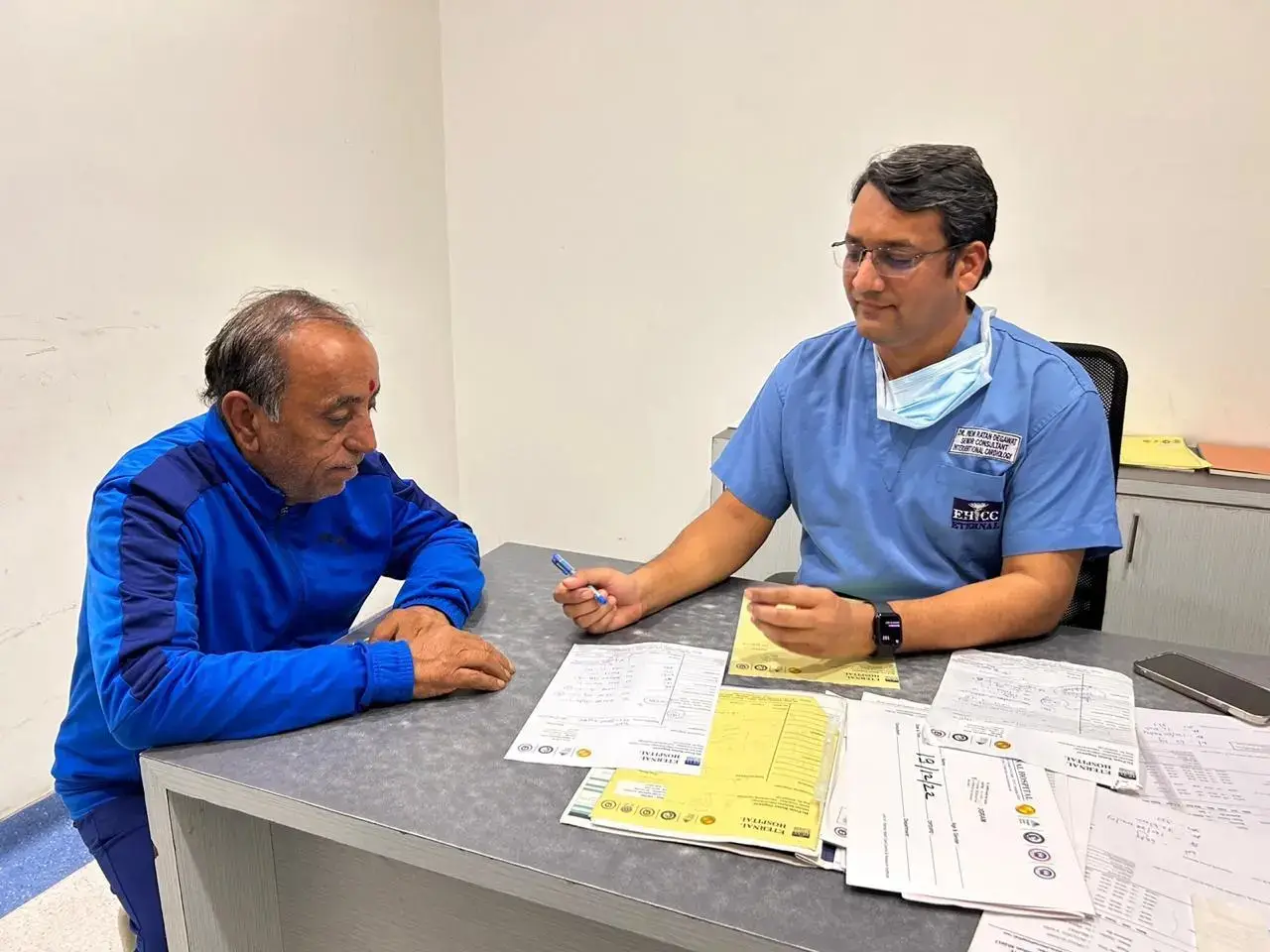
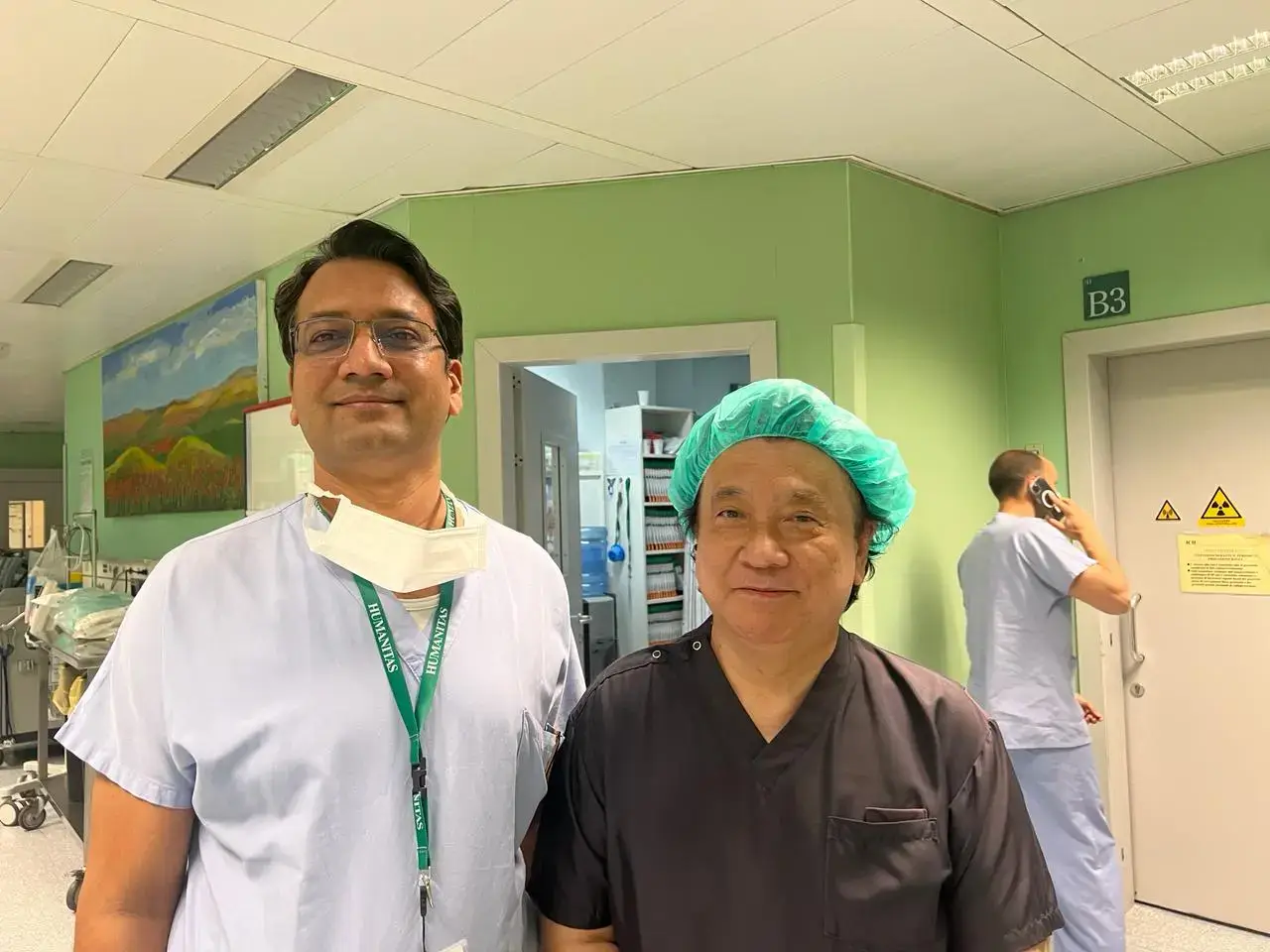
Dr. Prem Ratan Degawat is Associate Director of the TAVR & Structural Heart Disease Program and Director of the Mitral & Tricuspid Valve Program at Eternal Hospital, Jaipur. His work includes valve-in-valve and TAVR-in-TAVR procedures.
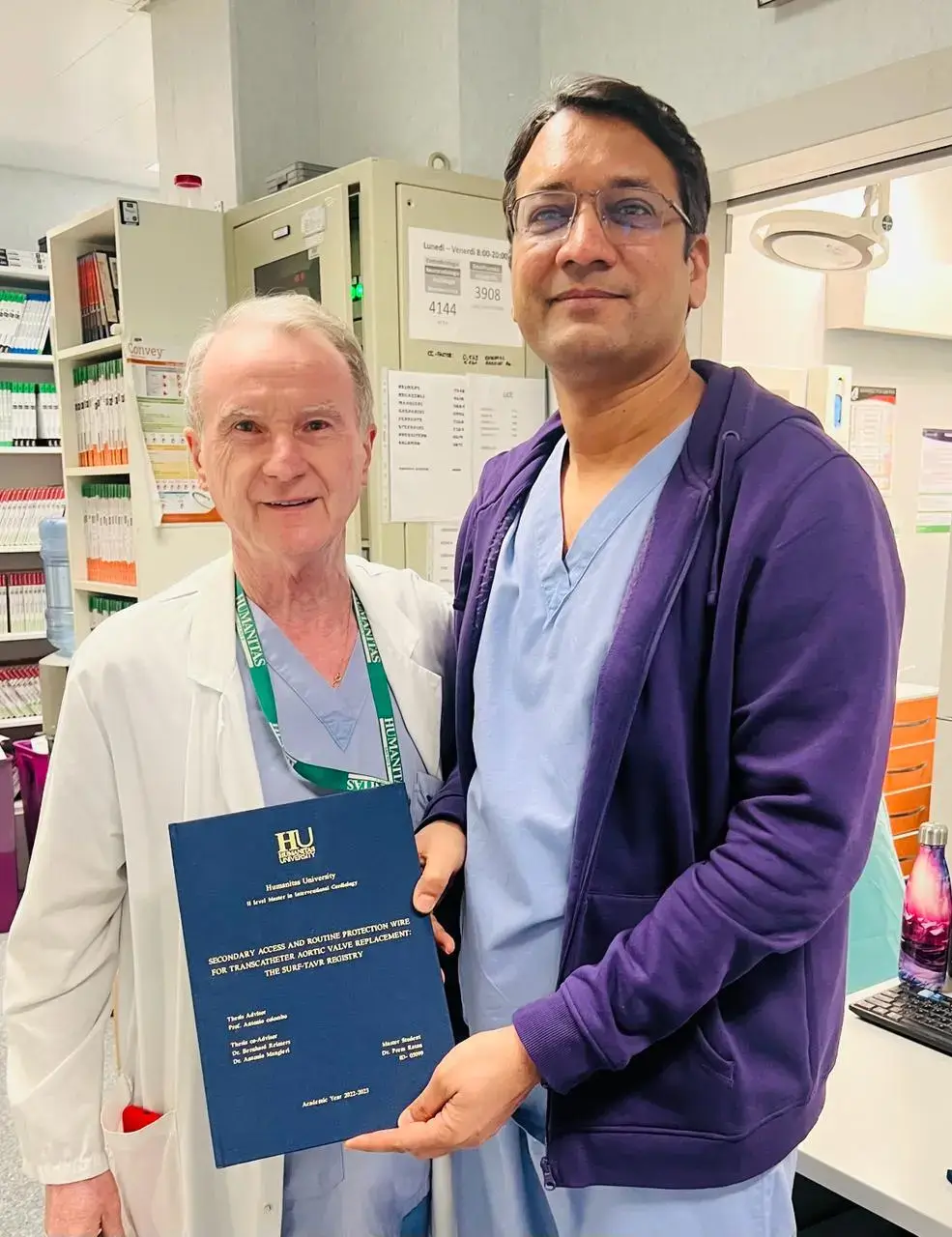
He completed his DM in Cardiology at King George’s Medical University, Lucknow, and trained in advanced structural heart intervention at IRCCS Humanitas, Italy.
- Clinic: 6/384, In front of Railway Headquarter, Sector 6, Malviya Nagar, Jaipur, Rajasthan 302017
- Hospital for procedures: Eternal Hospital, 3A Jagatpura Road, Near Jawahar Circle, Jaipur 302017
- OPD: Monday to Saturday, 10:00 AM to 4:00 PM
- Contact: +91-8960594076
FAQs
Can valve-in-valve TAVI treat a mechanical heart valve?
No. Standard aortic valve-in-valve TAVI is intended for a failing tissue valve, not a mechanical valve with rigid moving components. If you are unsure which type you have, check your valve card or operation record. A mechanical valve problem needs its own assessment and treatment plan.
Can it treat a leaking valve as well as a narrowed one?
It can treat selected surgical tissue valves that have narrowed, developed leakage through damaged leaflets, or both. Leakage around the outside of the prosthesis is a different problem. Echo and other imaging must identify the source of the leak before the team can recommend the appropriate treatment.
How long will the new valve last?
There is no guaranteed lifespan for an individual valve-in-valve implant. The original valve’s size and the final blood-flow result matter. Published results for first-time TAVI cannot simply be applied to every repeat procedure. Our valve durability guide gives background, while your team should explain the evidence relevant to your situation.
Can I have another TAVI after a previous TAVI?
Sometimes. This is often called redo TAVI or TAVR-in-TAVR. The existing transcatheter frame and the position of its leaflets make coronary access and obstruction separate planning concerns. Suitability must be checked with imaging; a previous successful TAVI does not guarantee that a second or third one will be feasible.
Is repeat surgery ruled out because I am older?
No. Age is one part of the decision, alongside frailty and other illnesses. A small old valve or unsafe coronary anatomy can make surgery the better choice even in an older person. Ask the Heart Team to explain both options using your scans and your goals for recovery.