
Medically reviewed by Dr. Prem Ratan Degawat, MD, DM (Cardiology)
Senior Interventional Cardiologist · Director, Mitral & Tricuspid Valve Therapy · Associate Director, TAVR & Structural Heart Disease Program, Eternal Hospital, Jaipur
Last updated on Jun 28, 2026 · View LinkedIn profile
If your doctor has mentioned MitraClip or TriClip, you are likely dealing with a leaking heart valve. Both devices treat valve regurgitation, a condition where a heart valve does not close properly. But they target different valves, and the decision between them depends on your specific diagnosis.
This guide explains what each device does, who needs which one, and how structural heart specialists in India approach this choice in 2026.
What Are MitraClip and TriClip? Two Devices, One Shared Technology
MitraClip and TriClip are both clip-based devices made by Abbott. They share the same core technology, called TEER (Transcatheter Edge-to-Edge Repair). But they repair different valves in the heart.
MitraClip repairs the mitral valve. This valve sits between the left upper and left lower chambers of the heart. TriClip repairs the tricuspid valve, which sits between the right upper and right lower chambers.
Both devices are delivered through a thin tube inserted into a vein in your leg. There is no open-heart surgery. No chest cutting. No heart-lung bypass machine.
This minimally invasive approach makes both devices an option for patients who are too high-risk for traditional surgery.
Understanding the Two Conditions: Mitral Regurgitation vs Tricuspid Regurgitation
To understand which device you might need, it helps to understand the two conditions they treat.
Mitral Regurgitation: When the Left Valve Leaks
The mitral valve controls blood flow on the left side of your heart. When it leaks, blood flows backward instead of forward. Your heart works harder to compensate. Over time, this strains the heart muscle and can cause breathlessness, fatigue, and heart failure.
Mitral regurgitation (MR) affects a significant portion of heart failure patients in India. Many patients in Rajasthan who are diagnosed late or who are elderly face high surgical risk. For these patients, MitraClip offers a treatment path that surgery cannot safely provide.
Tricuspid Regurgitation: The Forgotten Valve Disease
The tricuspid valve controls blood flow on the right side of your heart. For decades, doctors treated it as a secondary concern. Mild leakage was often watched rather than treated.
That thinking has changed. Research published between 2023 and 2025 has shown that significant tricuspid regurgitation (TR) substantially increases the risk of hospitalization, heart failure, and death. Patients with moderate-to-severe TR have a meaningfully worse long-term outlook when left untreated.
Tricuspid regurgitation is now recognized as an independent risk factor, not just a side effect of left-sided heart disease. This shift has driven rapid growth in the use of TriClip across India.
How TEER Works: The Technology Behind Both Devices
TEER stands for Transcatheter Edge-to-Edge Repair. Both MitraClip and TriClip use this approach.
Here is how it works in simple terms.
Your valve has two or more leaflets (flaps) that open and close with each heartbeat. When the leaflets do not close fully, blood leaks backward. TEER fixes this by clipping the leaflets together at the point of leakage.
The clip creates a double-opening valve instead of a single opening. This reduces the backward leak significantly. The heart no longer has to work against that leak with every beat.
The procedure takes place in a catheterization laboratory. You receive general anaesthesia. The cardiologist guides the clip through a vein in your groin, up through the heart, and into the correct position under continuous imaging guidance. Most patients are discharged within 2 to 3 days.
No stitches. No sternum cut. No long ICU stay.
MitraClip vs TriClip: A Side-by-Side Comparison
| Feature | MitraClip | TriClip |
|---|---|---|
| Target Valve | Mitral (left side) | Tricuspid (right side) |
| Condition Treated | Mitral regurgitation | Tricuspid regurgitation |
| Approach | Transseptal (through heart wall) | Transseptal (through heart wall) |
| Clip Size Options | Multiple sizes | Multiple sizes |
| Anaesthesia | General | General |
| Hospital Stay | 2 to 3 days | 2 to 3 days |
| Global Evidence | Extensive (COAPT trial and more) | Growing rapidly (TRILUMINATE Pivotal) |
| India Availability | Available at select centres | Available at select centres |
| Ideal Candidate | High-risk MR patients | High-risk TR patients |
Both procedures require a specialized structural heart team and dedicated imaging infrastructure. Not every cardiac hospital in India offers these procedures.
Who Needs MitraClip? Candidate Criteria
MitraClip is appropriate for patients who have:
- Moderate-to-severe or severe mitral regurgitation
- Symptoms such as breathlessness on exertion, reduced exercise capacity, or recurrent heart failure hospitalizations
- High or prohibitive surgical risk (due to age, prior surgeries, kidney disease, frailty, or other conditions)
- A mitral valve anatomy that is suitable for clip repair on echocardiography
The landmark COAPT trial showed that MitraClip reduced heart failure hospitalizations by 47% compared to medical therapy alone in eligible patients. This evidence has made MitraClip a Class I recommendation in major international guidelines for carefully selected patients.
Patients with rheumatic mitral disease or heavily calcified valves may not be suitable for MitraClip. A detailed echocardiogram assessment is required before any decision is made.
Who Needs TriClip? Candidate Criteria
TriClip is appropriate for patients who have:
- Moderate-to-severe or severe tricuspid regurgitation
- Persistent symptoms despite optimal medical therapy
- High or prohibitive surgical risk
- Suitable tricuspid valve anatomy on imaging
The TRILUMINATE Pivotal trial demonstrated that TriClip significantly reduced tricuspid regurgitation severity and improved quality of life at one year. The 2024 ESC Guidelines on Valvular Heart Disease now include a recommendation for transcatheter tricuspid repair in selected high-risk patients, reflecting the growing evidence base.
In India, awareness of tricuspid regurgitation as a treatable condition has grown substantially since 2023. More patients are now being referred for TriClip assessment rather than being managed on diuretics alone for years.
Who May Need Both Devices?
Some patients have regurgitation in both the mitral and tricuspid valves simultaneously. This is not uncommon in patients with advanced heart failure, atrial fibrillation, or a history of left-sided valve disease.
In selected cases, the structural heart team may plan a staged approach: treating the mitral valve first with MitraClip, then reassessing the tricuspid valve. In some situations, if the tricuspid leak is primarily driven by the mitral problem, fixing the mitral valve alone may reduce tricuspid regurgitation over time.
In other cases, both valves require independent treatment. The decision depends on the severity of each valve’s dysfunction, the patient’s overall condition, and the imaging findings.
This is why the evaluation process matters as much as the procedure itself.
The Decision Framework: How a Structural Heart Specialist Evaluates You
A structural heart specialist does not choose a device based on symptoms alone. The evaluation involves several steps.
Step 1: Echocardiogram. This ultrasound of the heart maps the exact anatomy of the leaking valve, measures the degree of regurgitation, and checks if the valve structure is suitable for clip repair.
Step 2: Heart Failure Assessment. The team checks whether optimal medicines have been tried and whether symptoms persist despite them.
Step 3: Surgical Risk Scoring. Tools like the STS score or EuroSCORE estimate the risk of open-heart surgery for each patient. High-risk or inoperable patients are prioritized for transcatheter approaches.
Step 4: Team Discussion. A Heart Team, consisting of an interventional cardiologist, a cardiac surgeon, and an imaging specialist, reviews each case together before recommending treatment.
Step 5: Patient Discussion. The recommended plan is explained to the patient and family in simple language. The patient’s goals, lifestyle, and preferences are part of the final decision.
This structured approach ensures that every patient receives the right device, or the right combination of treatments, based on their individual anatomy and health status.
Why Tricuspid Regurgitation Is No Longer Being Ignored in India
For years, tricuspid regurgitation was undertreated in India. Surgical repair of the tricuspid valve carries significant risk, especially in elderly or frail patients. Many patients were simply told to take water tablets (diuretics) and return for check-ups.
The arrival of TriClip has changed the conversation.
Patients who previously had no good treatment option now have a minimally invasive path to symptom relief and improved heart function. The right-sided heart failure symptoms (leg swelling, abdominal bloating, extreme fatigue) that severely affect quality of life can now be addressed directly.
Indian structural heart centres have been building experience with TriClip since 2022. By 2025 and 2026, the procedure is being offered at a growing number of specialized hospitals. Patient awareness is rising, and referrals for tricuspid valve assessment have increased meaningfully.
If you or a family member have been told “your right valve is also leaking but there is nothing to do,” that information may now be outdated. A specialist consultation is worth pursuing.
About Dr. Prem Ratan Degawat

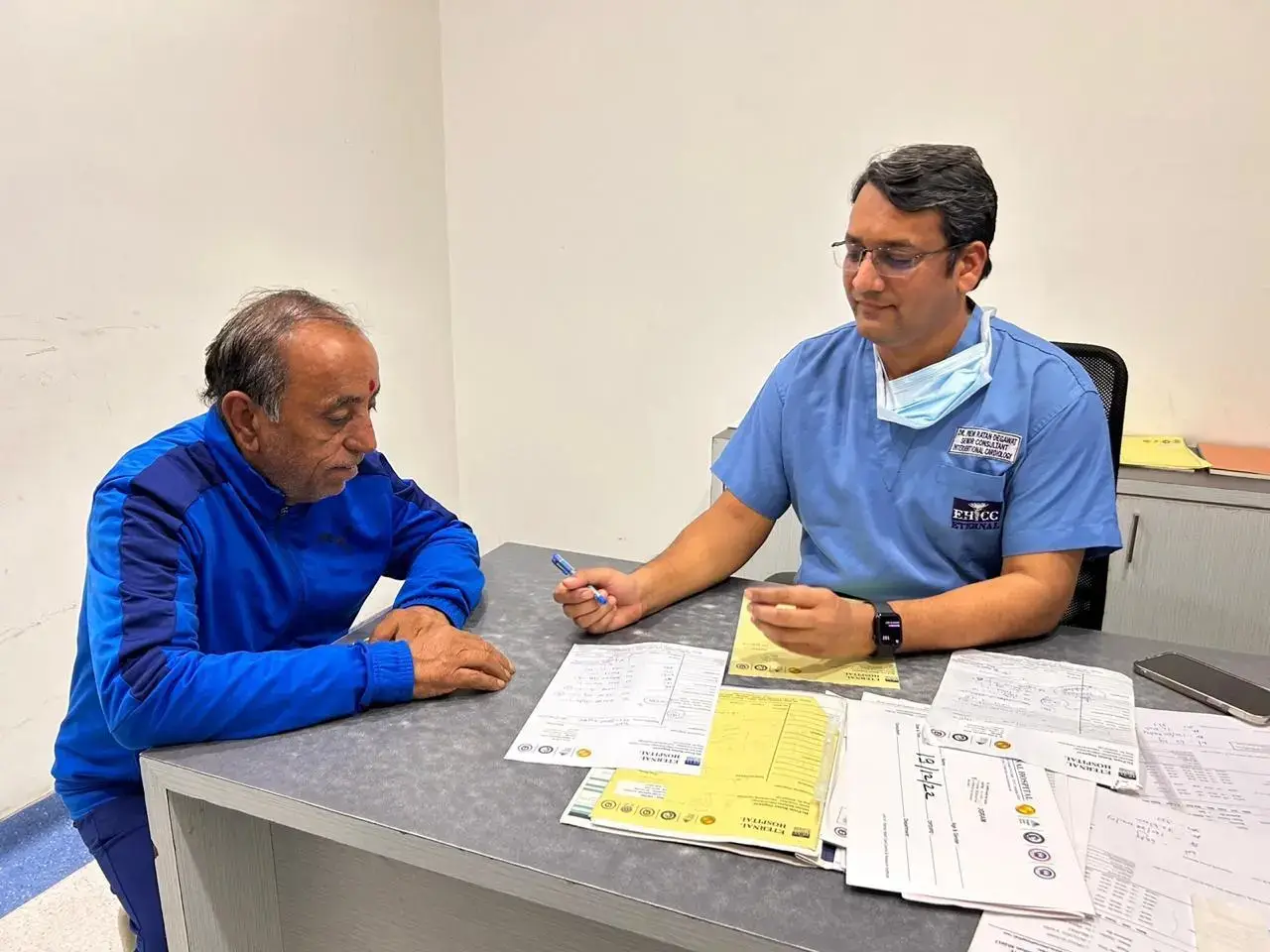





Dr. Prem Ratan Degawat is one of India’s leading structural heart specialists, currently serving as Associate Director of the TAVR and Structural Heart Disease Program and Director of the Mitral and Tricuspid Valve Program at Eternal Hospital, Jaipur.
Dr. Degawat is certified in TAVI, MitraClip, TRI-Clip, TMVR, and TTVR procedures, making him one of a small group of cardiologists in India with formal training across the full range of transcatheter valve repair options. He completed his DM in Cardiology from King George’s Medical University, Lucknow, and received advanced structural heart training at IRCCS Humanitas Research Hospital in Italy, where he contributed to research on over 2,000 TAVI cases.
His approach to MitraClip and TriClip assessment follows international Heart Team principles. Every patient receives a thorough echocardiogram review, surgical risk assessment, and a frank, unhurried discussion of all available options.
Patients from Jaipur, Ajmer, Kota, Udaipur, Bikaner, and Jodhpur consult Dr. Degawat for complex structural heart decisions.
Consultation Details:
- Hospital: Eternal Hospital, 3A Jagatpura Road, Near Jawahar Circle, Jaipur 302017
- OPD Timings: Monday to Saturday, 10:00 AM to 4:00 PM
- Clinic: 6/384, In front of Railway Headquarter, Sector 6, Malviya Nagar, Jaipur, Rajasthan 302017
- Contact: +91-8960594076
FAQs:
Q1: What is the difference between MitraClip and TriClip?
MitraClip repairs a leaking mitral valve on the left side of the heart. TriClip repairs a leaking tricuspid valve on the right side. Both use the same clip-based technology (TEER) and are delivered through a vein in the leg without open-heart surgery.
Q2: How do I know which device I need?
Your cardiologist will order a detailed echocardiogram to assess which valve is leaking and how severely. A structural heart specialist then reviews your anatomy, symptoms, and surgical risk before recommending MitraClip, TriClip, or both.
Q3: Is MitraClip available in Jaipur?
Yes. MitraClip is available at specialized structural heart centres in Jaipur. Patients from across Rajasthan, including those from Ajmer, Udaipur, and Kota, travel to Jaipur for this procedure.
Q4: Is TriClip available in India in 2026?
Yes. TriClip is available at select high-volume structural heart centres in India, including in Jaipur. Availability has expanded significantly since 2023, and more patients are now being assessed and treated.
Q5: Are MitraClip and TriClip covered under Chiranjeevi Yojana or Ayushman Bharat?
Coverage for transcatheter valve repair devices under Chiranjeevi Yojana and Ayushman Bharat is subject to scheme-specific package lists and updates. Patients are advised to check current coverage at the time of consultation. The hospital’s insurance desk can assist with verification.
Q6: What is the recovery time after MitraClip or TriClip?
Most patients are discharged within 2 to 3 days. There is no chest wound to heal. Patients typically return to light daily activities within one to two weeks. Full recovery and the full benefit of the procedure develop over the following weeks as the heart adjusts.
Q7: Can an elderly patient undergo MitraClip or TriClip?
Yes. Both procedures were specifically designed for patients who are too high-risk for open-heart surgery. Many patients treated with MitraClip and TriClip globally are in their 70s and 80s. Age alone is not a disqualifying factor.
Q8: Why should I consult Dr. Prem Ratan Degawat for MitraClip or TriClip?
Dr. Degawat holds formal certifications in both MitraClip and TRI-Clip, which is uncommon in India. His training in Italy exposed him to high-volume structural heart practice. He evaluates each patient through a structured Heart Team process and explains findings in plain language without medical jargon.