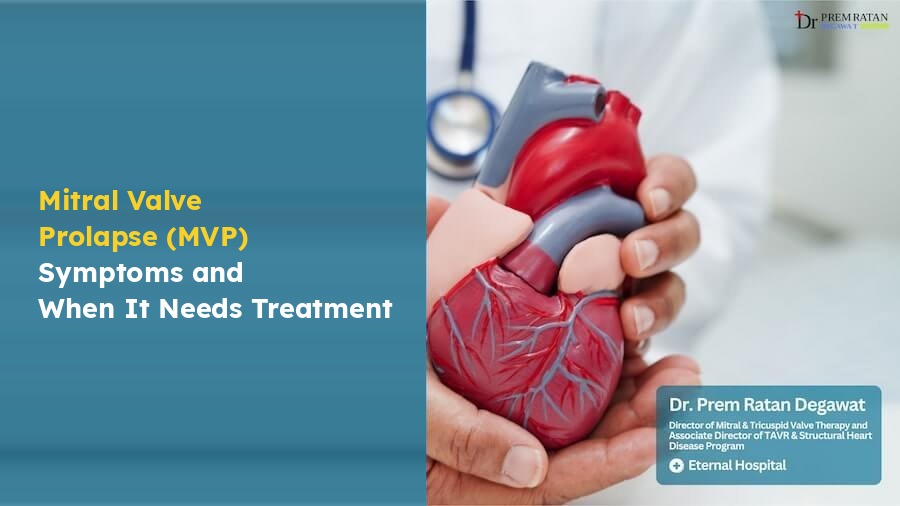
Medically reviewed by Dr. Prem Ratan Degawat, MD, DM (Cardiology)
Senior Interventional Cardiologist · Director, Mitral & Tricuspid Valve Therapy · Associate Director, TAVR & Structural Heart Disease Program, Eternal Hospital, Jaipur
Last updated on Nov 3, 2026 · View LinkedIn profile
Mitral valve prolapse, or MVP, means the flaps of one heart valve bulge back slightly each time the heart squeezes. For most people it is harmless and needs no treatment, only a repeat echo (an ultrasound scan of the heart) from time to time. It needs treatment when the valve starts to leak badly, and the leak either causes symptoms or begins to strain the heart.
What is mitral valve prolapse?
The mitral valve is a door between the two chambers on the left side of the heart. When the lower chamber, the main pump, squeezes, the valve’s two thin flaps shut tight so that blood goes forward to the body and not back.
In MVP, the flaps are a little loose or floppy. When the heart squeezes, one or both flaps bulge back into the upper chamber, a bit like a sail filling with wind. Your report may also call it a “floppy mitral valve” or “Barlow’s”. These mean much the same thing.
MVP is common. A long-running US heart study, the Framingham Heart Study, found it in about 1 in 40 adults (2.4%). It can run in families, notes the US health library MedlinePlus. It is also seen more often in thin people, and in people born with loose, stretchy body tissues, as in Marfan syndrome.
Is MVP the same as a leaking valve?
No, and the difference matters.
Prolapse describes the shape of the valve. A leak is separate. When the flaps do not meet well, some blood flows backwards with each beat. Doctors call this leak mitral regurgitation, and the report grades it as trace (tiny), mild, moderate or severe.
Many people with MVP have no leak at all, or only a trace. In the Framingham study, the leak in people with MVP was on average trace or mild.
So the word “prolapse” on its own tells you little. When I read an MVP report, I look first at two other things. How much does the valve leak? And is the main pumping chamber, called the left ventricle, normal in size and strength? To see how a leaking mitral valve differs from a narrowed one, read mitral regurgitation vs mitral stenosis.
What are the symptoms of mitral valve prolapse?
Most people have none. MVP is often found by chance. A doctor hears a click and a murmur (an extra whooshing sound) through the stethoscope, or an echo done for another reason shows it.
Some people notice palpitations (the heart racing, thumping or skipping), chest pain not caused by blocked arteries, dizziness, tiredness, panic attacks or breathlessness.
Here is the honest answer, though. Doctors are not sure these symptoms come from the valve (see the FAQ on anxiety below). That is why I do not blame every symptom on the valve. I check for other causes too.
A severe leak brings its own symptoms: breathlessness on walking or lying flat, tiring easily, swollen ankles or an irregular heartbeat.
Which symptoms need a doctor soon?
See your doctor soon, without waiting for your next check-up, if:
- Palpitations keep coming back, last longer than a few minutes or are getting worse
- You get breathless doing things that used to be easy
- Your ankles or feet swell
- Chest discomfort is getting worse
- You have a fever that will not go away, because, rarely, an infection can settle on a heart valve
Fainting needs special attention. MedlinePlus warns that some kinds of irregular heartbeat in people with MVP can be life threatening. The 2021 European guidelines for heart valve disease say doctors still debate how strong this link is. But they also note that most people with these dangerous heartbeats did not have a severe leak. So a faint or near faint deserves a proper check, even with a small leak. That usually means an ECG (a quick tracing of the heartbeat) and a 24-hour heartbeat recording, and sometimes a heart MRI scan.
Go to the emergency department at once if chest pain is sudden and spreads to the arms, back, neck or jaw, lasts more than 15 minutes, or comes with breathlessness or palpitations, or if you are struggling to breathe. Do not drive yourself, as the NHS also advises.
How is MVP checked over time?
The main test is the echo, which your report may call an echocardiogram. It shows the shape of the flaps, the size of any leak and how well the heart pumps. Sometimes doctors add an ECG, a closer echo done through the food pipe, or a heart MRI scan. Our heart valve tests guide explains each.
How often you need the test depends on the leak, not on the prolapse. For people without symptoms whose heart pumps normally, the moderate and severe rows below follow the European guidelines.
| Leak on your echo report | How often to check |
|---|---|
| None, trace or mild | Regular check-ups, at a gap your doctor sets |
| Moderate | Doctor visit every year, echo every 1 to 2 years |
| Severe, with no symptoms | Doctor visit and echo every 6 months |
Bring your old echo reports to every visit. I check each new one against the last, because change over time matters most.
Does mitral valve prolapse need treatment?
Most of the time, no. If there is little or no leak and you feel well, MVP needs no medicine and no procedure.
Some tablets, such as beta blockers, slow the heart and can calm a racing or thumping heartbeat. If a common irregular heartbeat called atrial fibrillation (AF) starts, blood thinners lower the risk of a clot.
But no tablet fixes a floppy valve. The European guidelines find no proof that taking medicines early stops a leak from getting worse while the heart still pumps well. A severe leak needs the valve repaired or replaced.
When does a leaking mitral valve need repair?
Only when the leak is severe. Then the European guidelines advise surgery if any of these apply:
- You have symptoms caused by the leak, such as breathlessness or tiredness.
- The main pumping chamber is getting larger, or its pumping strength is falling. On the report, pumping strength is called ejection fraction (EF). For a leaking mitral valve, an EF of 60% or less is already a warning sign, even though it would count as normal in most hearts.
- The leak has caused an irregular heartbeat (AF).
- The leak has raised the pressure in the lungs.
So doctors do not always wait for symptoms. The aim is to fix the valve before the pump is damaged.
Repair comes first. If surgery is needed, fixing your own valve is the first choice whenever the repair is likely to last, because people live longer after a repair than after a new valve. When only one part of a flap bulges, it can usually be repaired with a low chance of the leak coming back. At hospitals that do many of these operations, about 1 in 8 people have a moderate or severe leak again 20 years after repair. When large parts of the flaps are floppy, as in Barlow’s, repair is harder.
If the valve cannot be repaired, it is replaced. Read more on mitral valve replacement.
Repair is not for every prolapse. I tell patients with a mild leak that the word prolapse on a report is not a reason for an operation.
What if open surgery is too risky?
Some people with a severe leak are too old, too frail or too ill for open-heart surgery. For them there is a way to fix the leak without opening the chest, best known by the name of the device, MitraClip. A thin tube is passed through a vein in the leg up to the heart, and a small clip holds the flaps together so they leak less.
The European guidelines keep it for people who have symptoms, whose valve shape suits the clip, and whom the heart doctors and surgeons together judge unable to have surgery or at high risk from it. It is not for a fit person who can safely have surgery, and it is decided case by case. Read about MitraClip in Jaipur, and how it compares with the clip for the heart’s right-side valve in MitraClip vs TriClip.
What should you ask your cardiologist?
Take your echo report and ask:
- How much is my valve leaking: trace, mild, moderate or severe?
- Is my main pumping chamber normal in size, and what is my EF?
- When should I have my next echo?
- If I ever need treatment, can my valve be repaired rather than replaced?
If you want a second opinion on an MVP report, you can book a consultation with Dr. Prem Ratan Degawat in Jaipur. Bring all your echo reports, old and new, with your ECGs and medicine list.
About Dr. Prem Ratan Degawat

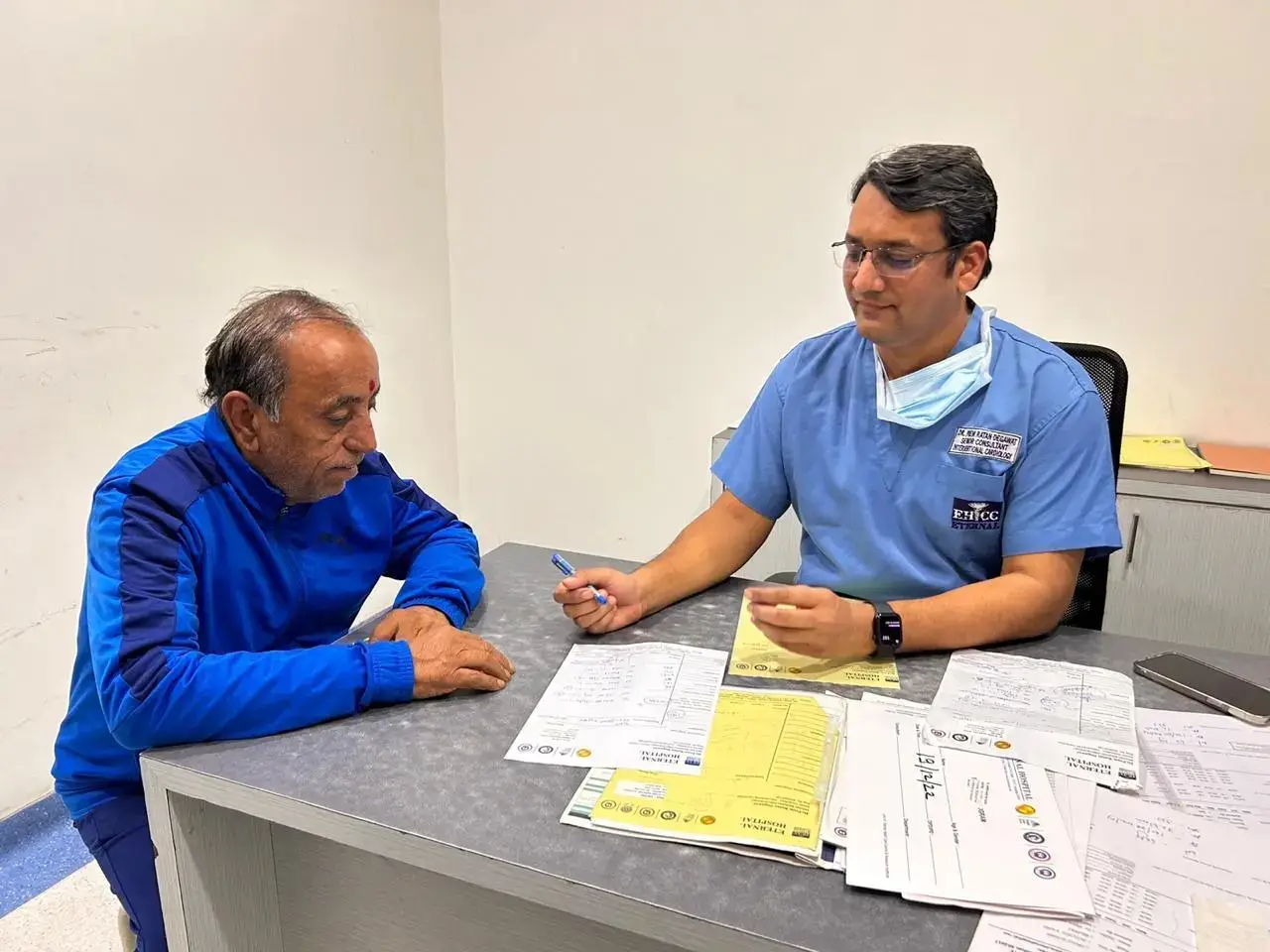


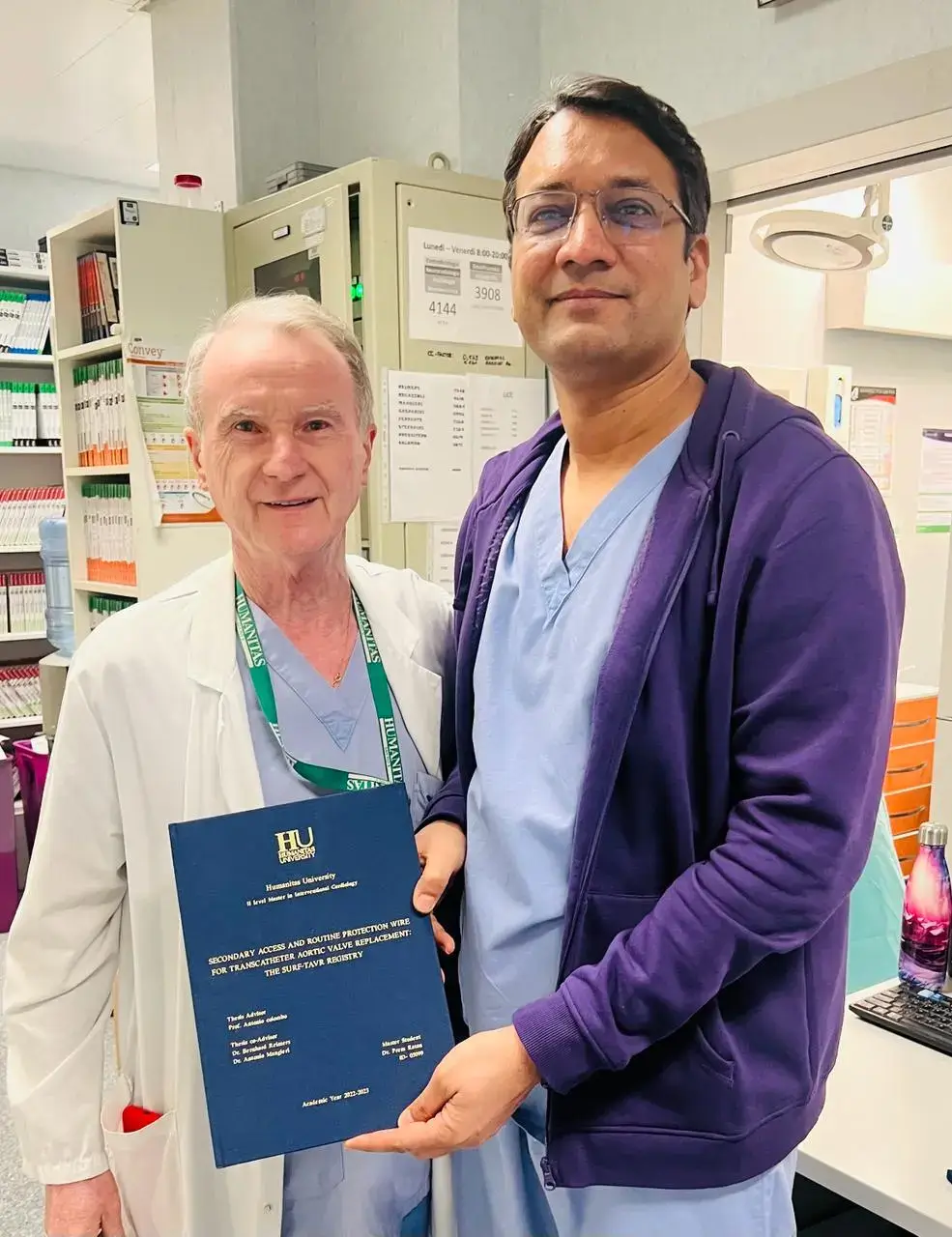


Dr. Prem Ratan Degawat is Associate Director of the TAVR & Structural Heart Disease Program and Director of the Mitral & Tricuspid Valve Program at Eternal Hospital, Jaipur.
He completed his DM in Cardiology at King George’s Medical University, Lucknow, and trained in advanced structural heart intervention at IRCCS Humanitas, Italy.
- Clinic: 6/384, In front of Railway Headquarter, Sector 6, Malviya Nagar, Jaipur, Rajasthan 302017
- Hospital for procedures: Eternal Hospital, 3A Jagatpura Road, Near Jawahar Circle, Jaipur 302017
- OPD: Monday to Saturday, 10:00 AM to 4:00 PM
- Contact: +91-8960594076
FAQs
Is mitral valve prolapse dangerous?
For most people, no. Most people with MVP never have a serious problem from it, and many never know they have it. A small number develop a severe leak or a heartbeat problem over the years. That is why regular check-ups matter, and why fainting or growing breathlessness should never be ignored.
Can mitral valve prolapse get worse?
It can in some people, which is why the echo is repeated. The two things to watch are the size of the leak and the size of the main pumping chamber. With a moderate leak and no symptoms, a yearly check-up and an echo every one to two years is usual. A severe leak is checked every six months.
Do I need antibiotics before dental treatment if I have MVP?
Usually not. American Heart Association advice, which dentists follow, keeps antibiotics before dental work for a small group: people with an artificial valve or a valve repair ring, a past valve infection, some heart transplants or certain heart problems present from birth. MVP alone is not on that list. Still, tell your dentist about your heart.
Can a woman with MVP have a normal pregnancy?
Usually, yes. The NHS advises seeing a heart specialist if you are pregnant or planning to be, because pregnancy can make valve symptoms worse. Most women with heart valve disease can have a safe pregnancy, though some need extra check-ups or treatment. Take your latest echo report to your first pregnancy visit.
Can MVP cause anxiety or panic attacks?
Some people with MVP report panic attacks or palpitations, and this group of symptoms has been called “MVP syndrome”. MedlinePlus says the link between these symptoms and the valve is not clear. In the Framingham study, chest pain and breathlessness were just as common in people without MVP. Anxiety deserves its own treatment, whatever the echo shows.