Medically reviewed by Dr. Prem Ratan Degawat, MD, DM (Cardiology)
Senior Interventional Cardiologist · Director, Mitral & Tricuspid Valve Therapy · Associate Director, TAVR & Structural Heart Disease Program, Eternal Hospital, Jaipur
Last updated on Oct 27, 2026 · View LinkedIn profile
When a doctor says “you need an ICD”, most families hear only one thing: a machine that gives shocks. The fear is understandable. This guide explains in plain words what the device does, who benefits from it, and what life looks like afterwards.
What is an ICD?
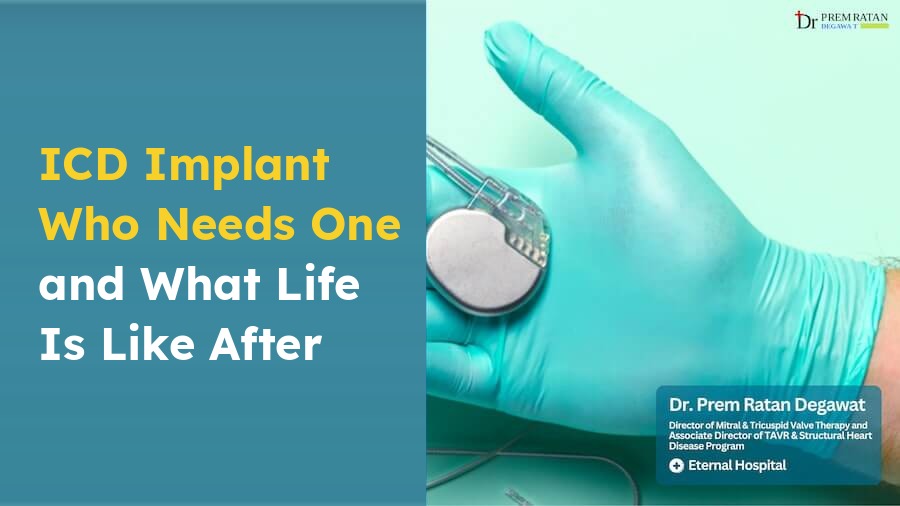
ICD stands for implantable cardioverter defibrillator. It is a small metal box, about the size of a large pocket watch, placed under the skin below the collarbone. One or more thin wires run from it through a vein into the heart.
The ICD watches every heartbeat, all the time. Mostly it does nothing. If the heart suddenly goes into a very fast, dangerous rhythm, the kind that causes cardiac arrest, it acts within seconds. First it may try a series of quick, painless pulses to bring the rhythm back. If that does not work, it gives one strong shock that resets the heart.
Cardiac arrest is not a heart attack. A heart attack is a blocked artery; in cardiac arrest the heart’s electrical system fails and pumping stops. See heart attack vs cardiac arrest.
How is an ICD different from a pacemaker?
The two look alike and are fitted the same way, but they do different jobs.
- A pacemaker helps a heart that beats too slowly. It sends small signals to keep the beat from dropping.
- An ICD protects a heart that may suddenly beat dangerously fast. It can also work as a pacemaker when needed.
So every ICD can pace, but a pacemaker cannot shock. If your doctor has advised a pacemaker instead, our pacemaker guide covers that device. For a side-by-side comparison of a pacemaker, an ICD and a CRT-D in Hindi, read ICD aur Pacemaker mein kya fark hai.
Who needs an ICD?
There are two broad groups of people.
People who have already survived a dangerous rhythm. If your heart has stopped once and you were revived, or a dangerous fast rhythm was caught on an ECG, it can happen again. An ICD is usually advised, unless the cause was temporary and has been fixed.
People whose heart is at high risk, even though nothing has happened yet. The most common reason is a weak heart muscle. Doctors measure how well the heart pumps with an echo test; the report calls it ejection fraction, or EF. In a healthy heart, the EF is usually above 50%. When the EF stays at 35% or below despite the right medicines, the risk of sudden death goes up.
Two large trials tested ICDs in this group:
- In MADIT-II, people with an old heart attack and an EF of 30% or less lived longer with an ICD. Over about two years, 14 in 100 died with the device against 20 in 100 without it.
- In SCD-HeFT, people with heart failure and an EF of 35% or less had about a quarter fewer deaths with an ICD. A heart-rhythm medicine tested alongside it did not help.
Some inherited heart conditions raise the risk in young people even when the pumping strength is normal. The NIH guide on who needs a defibrillator lists these situations.
When is an ICD not the right answer?
Not everyone with a weak heart needs one, and timing matters.
Right after a heart attack. The heart muscle often recovers in the weeks that follow. The DINAMIT trial fitted ICDs 6 to 40 days after a heart attack and found no fall in deaths. So doctors usually wait, give medicines, and then check the pumping strength again.
When the weakness has a cause that can be fixed. Blocked arteries can be opened. A badly narrowed aortic valve can be replaced, often without open surgery through TAVI. After that, the heart sometimes pumps much better, and the ICD question changes. Before an ICD decision, I ask whether the EF was measured again after the medicines had time to work.
When the heart failure is not from blocked arteries. In the DANISH trial, people with this type of heart failure who got an ICD had half as many sudden deaths, but overall deaths did not fall by a clear margin. For them, the decision depends on age, other illnesses and how they respond to treatment. It is a case by case discussion, not a rule.
When other illness limits life. For a very frail person, or someone with a serious illness that will shorten life, the device may add little. Discuss this honestly with your cardiologist.
Good heart failure treatment comes first in every case.
What happens during ICD surgery?
It is a smaller operation than most people imagine. As the US patient guide MedlinePlus describes it:
- You stay awake. The skin below the left collarbone is numbed, so you do not feel pain.
- The doctor makes a small cut, makes a pocket under the skin for the box and guides the wire into the heart using X-ray pictures.
- The whole thing usually takes two to three hours.
- Most people go home the next day.
For a few weeks, do not lift heavy things with that arm or raise it above your shoulder, so the wire can settle. Full recovery takes about four to six weeks. You will get a wallet card with your device details; keep it with you always.
Another type, the subcutaneous ICD, has its wire under the skin of the chest instead of inside the heart. It cannot pace, so it suits only some patients.
What does an ICD shock feel like?
This is the question families ask me most often in OPD.
The small pulses an ICD uses to correct a fast rhythm are not painful, and many people never notice them. A full shock is different. It lasts less than a second, and people describe it as a sudden hard kick or thump in the chest. It can hurt, and it can be frightening.
What to do after a shock, as advised by the NIH:
- One shock, and you feel fine afterwards. Sit down and rest. Call your doctor the same day or the next day.
- Several shocks in a short time, or you feel unwell. Go to the hospital emergency at once.
Sometimes an ICD shocks when it is not needed, for example because of a damaged wire or a very fast heartbeat during heavy exercise. This is more common in the first weeks, and changing the device settings or medicines usually stops it.
Many people live with an ICD for years and never get a single shock.
What is daily life like with an ICD?
Most people go back to work and normal family life. A few precautions matter.
- Mobile phone. Keep it at least 15 cm (6 inches) from the device. Hold it to the ear on the opposite side, and do not keep it or earphones in a shirt pocket over the device.
- Airport security. Show your ICD card and ask for a hand search if you prefer.
- MRI scan. Many newer ICDs allow MRI with special precautions. Always tell the scan centre first.
- Driving. Rules differ by country, and a shock can make you faint at the wheel. In the US, the NIH notes waits of about one week for a preventive ICD and up to six months after a cardiac arrest or a shock, and no driving of commercial vehicles. Ask your doctor before you drive again, especially if driving is your work.
- Exercise. Walking and most sports are fine. Avoid contact sports where the device can take a hit.
- Engines and tools. Do not lean over a running car engine, and keep electric power tools away from your chest.
You will need a device check at least every six months. The doctor reads the ICD with a small wand held over the skin.
How long does the ICD battery last?
The NIH puts ICD battery life at about 5 to 7 years. It runs out faster if the device has to pace a lot or give many shocks. Your check-ups show how much battery is left, so a replacement is planned well in time.
Changing the battery means changing the box. This is quicker than the first operation, because the wires are usually kept.
What should you ask before saying yes?
The cost of an ICD in India depends on the type of device, the hospital and the length of stay. Ask for a written estimate that lists the device, the procedure and the follow-up checks, and ask what a battery change will cost later.
Also ask:
- Is it because of a dangerous rhythm I have had, or to prevent one?
- What is my EF now, and was it checked again after medicines?
- Who will check my device every six months?
If you want a second opinion on whether you need an ICD, you can book a consultation with Dr. Prem Ratan Degawat in Jaipur. Please bring your echo reports and ECGs, with a list of your medicines.
About Dr. Prem Ratan Degawat
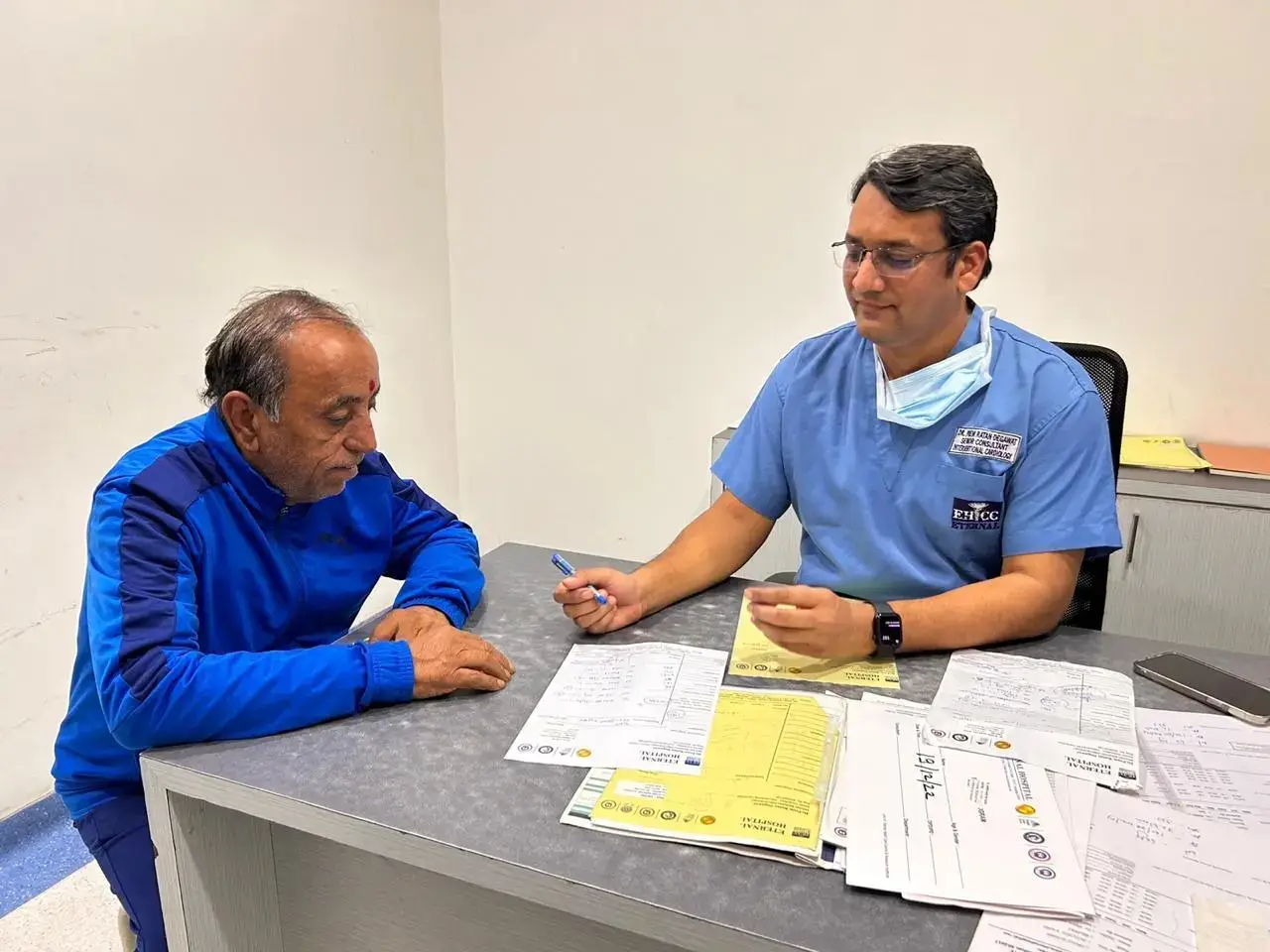
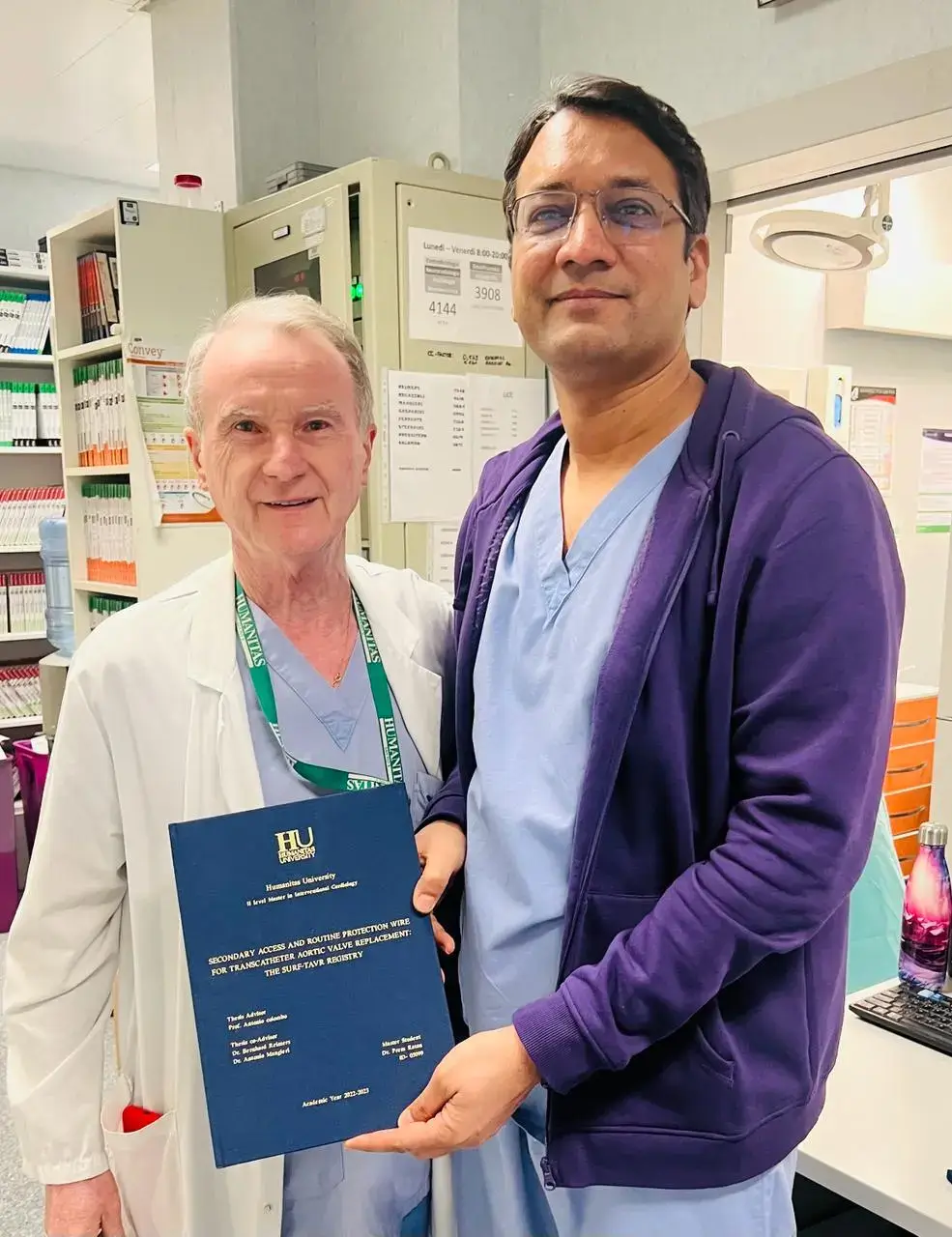
Dr. Prem Ratan Degawat is Associate Director of the TAVR & Structural Heart Disease Program and Director of the Mitral & Tricuspid Valve Program at Eternal Hospital, Jaipur.
He completed his DM in Cardiology at King George’s Medical University, Lucknow, and trained in advanced structural heart intervention at IRCCS Humanitas, Italy.
- Clinic: 6/384, In front of Railway Headquarter, Sector 6, Malviya Nagar, Jaipur, Rajasthan 302017
- Hospital for procedures: Eternal Hospital, 3A Jagatpura Road, Near Jawahar Circle, Jaipur 302017
- OPD: Monday to Saturday, 10:00 AM to 4:00 PM
- Contact: +91-8960594076
FAQs
Is ICD surgery painful?
The surgery itself is done under local numbing medicine, so you feel pressure but not sharp pain. The area below the collarbone is sore for a few days afterwards, and simple painkillers usually control it. Most people go home the next day and return to light daily activity within a week.
Can I live a normal life with an ICD?
Yes, for most people. You can work, travel and exercise, and family life carries on as before. The main changes are keeping your phone away from the device, carrying your device card, telling doctors before any scan, and going for a device check at least every six months.
What is the difference between an ICD and a pacemaker?
A pacemaker helps a heart that beats too slowly by sending small signals to keep it going. An ICD watches for dangerously fast rhythms and stops them with quick pulses or a shock. An ICD can also work as a pacemaker, but a pacemaker cannot give a shock.
How long does an ICD battery last?
Usually about 5 to 7 years, according to the NIH. It runs down faster if the device paces often or gives many shocks. Regular device checks show how much battery is left, so the replacement is planned in advance. The wires in the heart are usually kept, and only the box is changed.
Can an ICD be removed or switched off?
The shock function can be switched off without surgery, by reprogramming the device from outside the body. This is sometimes chosen near the end of life, when shocks would only cause distress. Removing the device itself needs a procedure and is usually done only for infection or a damaged wire.