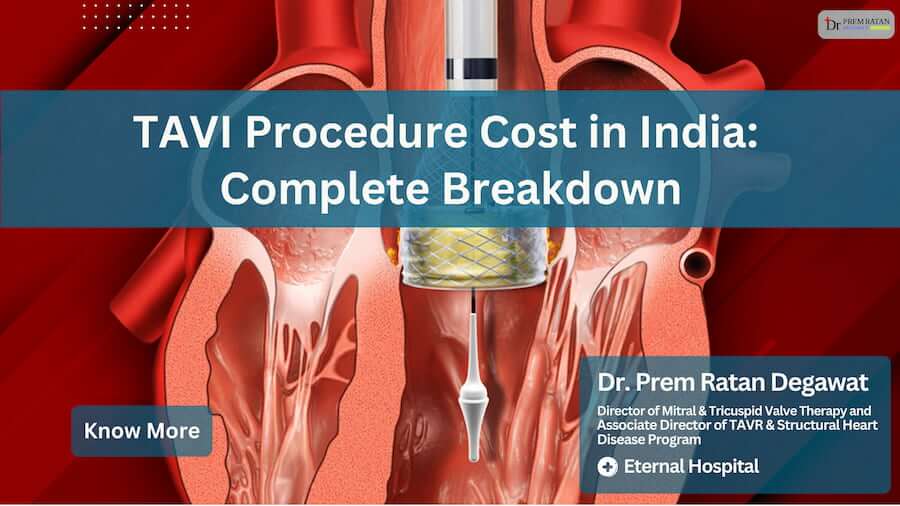
Transcatheter Aortic Valve Implantation (TAVI) is a minimally invasive procedure that replaces a diseased aortic valve without open-heart surgery. If you’re searching for “TAVI surgery cost in India,” this guide presents clear, practical information: realistic cost ranges, the factors that influence price, what to expect before and after the procedure, and how to plan treatment in India. The guidance here reflects the clinical perspective of Dr. Prem Ratan Degawat and is geared toward both domestic and international patients who want accurate, actionable information to make confident decisions.
Choosing the right treatment for aortic valve disease involves balancing clinical benefits, risks, and cost. TAVI offers faster recovery and less surgical trauma than traditional valve replacement, making it an appealing option for many patients—especially those who are older or have higher surgical risk. India has emerged as a preferred destination for high-quality, cost-effective cardiac care. This guide explains typical TAVI surgery costs in India, clarifies what those costs usually include, highlights the main drivers of price variation, and outlines practical steps to plan your care.
What is TAVI and who is it for?
TAVI (Transcatheter Aortic Valve Implantation), also called TAVR, replaces a narrowed aortic valve by delivering a bioprosthetic valve through a catheter—most commonly via the femoral artery in the groin. The new valve is expanded inside the diseased valve and begins functioning immediately.
TAVI is typically recommended for patients with severe aortic stenosis who are at intermediate or high risk for open-heart surgery. Candidacy is determined after a detailed evaluation by a multidisciplinary Heart Team, which includes interventional cardiologists, cardiac surgeons, imaging specialists, and anesthesiologists.
Typical TAVI surgery cost in India
TAVI costs in India vary widely depending on the hospital, the valve device used, the complexity of the case, and the city where treatment is provided. Below are typical price ranges you can expect:
- Lower-tier private centers: ₹15–18 lakh.
- Major private tertiary centers in metro cities: ₹18–30 lakh.
- High-end packages or complex cases: Up to ₹35–40 lakh in rare instances.
These estimates generally represent bundled packages that include the valve device, the procedure, a short hospital stay, ICU/CCU monitoring, standard pre- and post-operative tests, and surgeon fees. Always request a written, itemized estimate to confirm precisely what is included and what is not.
Main factors that affect cost
- Valve device: The cost of the prosthetic valve is the largest single expense. Imported premium valves are more expensive than domestically manufactured options. Confirm which valve brand and model will be used and why.
- Hospital tier and location: Corporate tertiary hospitals in major metro areas usually have higher facility charges than smaller regional hospitals.
- Case complexity: Complex anatomy, the need for valve-in-valve procedures, or concurrent coronary interventions increase procedure time, consumable use, and monitoring requirements.
- Team experience and volume: High-volume centers with experienced operators may charge more but can reduce complication rates and improve outcomes.
- Ancillary costs: Pre-operative CT scans, transesophageal echocardiography, blood tests, extended ICU stays, medications, and cardiac rehabilitation add to the final bill.
What a typical cost package should include
A transparent package should clearly list:
- Device cost (valve model and brand)
- Operating room and catheter lab fees
- Surgeon and interventional cardiologist fees
- Anesthesia and monitoring fees
- ICU and room charges for the expected length of stay
- Basic pre-operative diagnostics (CT, echocardiogram, labs)
- Routine post-op medications and follow-up visits for the immediate post-discharge period
Items often excluded from base packages and likely to increase the bill: extended ICU stays, blood transfusions, re-interventions, advanced imaging beyond the standard workup, and outpatient cardiac rehabilitation.
India versus Western countries: costs and outcomes
India typically offers TAVI at substantially lower cost than Western countries—often 40–70% less—while providing care that meets global standards in experienced centers. Even after including travel and accommodation for international patients, many people save significantly compared to the cost of the same procedure in the U.S. or parts of Europe. Outcome quality is linked to the experience of the Heart Team, procedural volume, and adherence to international protocols. Choosing a centre with proven outcomes and an established structural heart program is essential.
How to plan your TAVI procedure in India
- Collect prior medical records: Gather recent echocardiograms, CT scans, angiograms, discharge summaries, and a list of current medications.
- Request remote evaluation: Many hospitals offer teleconsultations; submit your records for a preliminary review to determine candidacy.
- Obtain multiple written estimates: Ask for itemized cost breakdowns from 2–3 hospitals to compare what is included.
- Confirm valve brand and team credentials: Verify the valve type proposed and the Heart Team’s experience with TAVI.
- Arrange finances or insurance: Check insurance coverage and preauthorization; explore hospital payment plans or medical loans if necessary.
- Plan travel and stay: Allow 10–21 days in-country for pre-op evaluation, procedure, and initial recovery. Choose accommodation near the hospital and plan for follow-up.
- Prepare for post-op care: Make sure you have a plan for cardiac rehab, medication supply, and follow-up imaging after returning home.
What to expect during and after the procedure
- During the procedure: TAVI typically takes 1–2 hours. Most patients undergo local anesthesia with sedation or general anesthesia, depending on clinical needs. The team monitors the patient in a cath-lab setting and transfers to ICU or high-dependency care afterward.
- Hospital stay: Many uncomplicated patients remain in hospital 3–5 days. ICU observation is common for the first 24–48 hours.
- Early recovery: Symptom relief (less breathlessness, more energy) is often noticeable within days.
- Full recovery: Most patients can return to normal daily activities within 4–6 weeks. Individual recovery depends on age, pre-existing conditions, and overall health.
- Follow-up: Echocardiography at 1 month, 6 months, and then annually is standard to monitor valve function.
Frequently asked questions
What is the average TAVI surgery cost in India?
Typical total costs range from ₹15 lakh to ₹30 lakh, depending on the hospital, device choice, and case complexity. Always request a detailed, written estimate.
Why do prices vary so much between hospitals?
Differences in device costs, hospital facility charges, team expertise, geographic location, and case complexity create price variation.
Is TAVI in India as safe as in Western countries?
When performed in experienced centers with a multidisciplinary Heart Team, outcomes are comparable to international benchmarks. Choose centres with established TAVI programs and documented outcomes.
Can international patients get a fixed package price?
Many hospitals offer international patient packages that include device, procedure, hospital stay, and basic follow-up. Confirm what is included and what is excluded in writing.
Will insurance cover TAVI in India?
Coverage depends on your insurer and policy. Some insurers pre-authorize treatment abroad; others do not. Confirm coverage and preauthorization with your insurer and the hospital before proceeding.
How long before I can travel home after TAVI?
Most uncomplicated patients can travel within 7–14 days once medically cleared and stable. Carry your discharge summary, device details, and medication list.
Practical checklist before booking
- Send all prior imaging and records for review.
- Obtain at least two itemized cost estimates.
- Confirm which valve brand/model will be used and why.
- Check insurance preauthorization or arrange financing.
- Book accommodation near the hospital and allow sufficient recovery time.
- Request a written discharge summary and device information before leaving.
Conclusion
TAVI is a proven, minimally invasive option for many patients with severe aortic stenosis. India offers a combination of experienced teams and cost advantages, especially when you choose a center with a dedicated structural heart program and transparent pricing. If you are considering TAVI, a personal evaluation by a qualified structural heart specialist is the best next step. For a personalized assessment and detailed cost estimate with Dr. Prem Ratan Degawat’s team at Eternal Hospital, arrange a consultation today to discuss candidacy, valve options, and an itemized treatment plan.
Consult Dr. Degawat – TAVI Doctor in India
Clinic: 6/384, malviya Nagar In Front Of Railway Head Quarter, Rajasthan 302017
Hospital: Eternal Hospital, Jagatpura Road, Jaipur, Rajasthan
Disclaimer: This blog post is for informational purposes only and does not constitute medical advice. Always consult with a qualified healthcare professional for diagnosis and treatment.