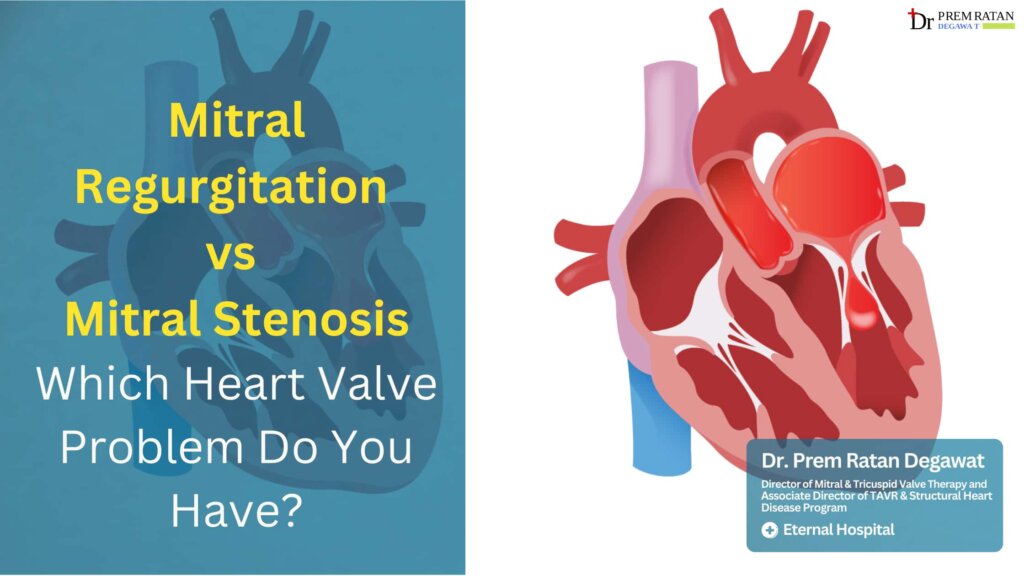
Understanding the difference between mitral regurgitation and mitral stenosis is crucial for proper diagnosis and treatment. Both affect the mitral valve—the gateway between your heart’s left atrium and left ventricle- but in completely opposite ways.
What Is Mitral Valve Disease?
Your mitral valve acts like a one-way door, allowing oxygen-rich blood to flow from the left atrium into the left ventricle while preventing backward flow. When this valve malfunctions, it causes either mitral regurgitation or mitral stenosis.
Mitral Regurgitation (MR): The valve doesn’t close properly, causing blood to leak backward into the left atrium.
Mitral Stenosis (MS): The valve opening narrows, restricting blood flow from the atrium to the ventricle.
Mitral regurgitation is the most prevalent left heart valve disease globally, with moderate-to-severe cases affecting approximately 2.5 million people in the United States alone.
Mitral Regurgitation: The Leaky Valve Problem
What Happens in Mitral Regurgitation?
In mitral regurgitation, the valve leaflets fail to seal completely, allowing blood to flow backward during each heartbeat. This reduces the amount of oxygen-rich blood reaching your body.
Primary Causes of Mitral Regurgitation:
Degenerative (Primary) MR:
- Mitral valve prolapse—leaflets bulge backward abnormally
- Age-related valve tissue degeneration
- Ruptured chordae tendineae (support cords connecting valve leaflets)
Functional (Secondary) MR:
- Heart enlargement from prior heart attack or heart failure
- Weakened heart muscle pulling the valve open
- Left ventricular dysfunction
Other Causes:
- Rheumatic fever (common cause in India)
- Infective endocarditis (heart valve infection)
- Congenital heart defects present at birth
Symptoms of Mitral Regurgitation:
Mild MR: Often no symptoms for years
Moderate to Severe MR:
- Shortness of breath, especially when lying flat or during activity
- Persistent fatigue and weakness
- Irregular heartbeat or palpitations
- Swollen feet, ankles, and legs
- Chronic cough, sometimes with pink-tinged mucus
- Reduced exercise tolerance
Mitral Stenosis: The Narrowed Valve Problem
What Happens in Mitral Stenosis?
The valve opening becomes progressively narrower, restricting blood flow from the left atrium to the left ventricle. This forces your heart to work harder and causes blood backup into the lungs.
Primary Causes of Mitral Stenosis:
Rheumatic Fever (Leading Cause): Rheumatic fever is the most common cause of mitral stenosis globally. The stenosis typically develops 20-40 years after an initial episode of untreated strep throat in childhood. In India, mitral regurgitation is the predominant lesion in patients under 18 years, while mitral stenosis becomes more common in adults above 18 years.
Other Causes:
- Calcium deposits on valve leaflets (elderly patients)
- Congenital valve abnormalities
- Infective endocarditis
- Radiation therapy to the chest area
Symptoms of Mitral Stenosis:
Early Stage: Can remain symptomless for 20-40 years
Advanced Stage:
- Severe shortness of breath with minimal exertion
- Extreme fatigue limiting daily activities
- Swelling in feet, ankles, and legs
- Irregular heartbeat (atrial fibrillation)
- Chest discomfort or tightness
- Coughing up blood (hemoptysis)
- Dizziness or fainting spells
Key Differences: Mitral Regurgitation vs Mitral Stenosis
| Feature | Mitral Regurgitation | Mitral Stenosis |
|---|---|---|
| Valve Problem | Doesn’t close properly (leaks) | Doesn’t open fully (narrowed) |
| Blood Flow Direction | Flows backward into left atrium | Forward flow blocked |
| Prevalence | Most common valve disease | Less common, declining globally |
| Most Common Cause | Degenerative changes, prolapse | Rheumatic fever |
| Age of Onset | Any age, common 50+ | Usually 40-60 years |
| Progression | Can be gradual or sudden | Typically gradual over decades |
| Heart Sound | Holosystolic murmur at apex | Opening snap with diastolic rumble |
| Common Complications | Heart failure, atrial fibrillation | Pulmonary hypertension, stroke |
How Are These Conditions Diagnosed?
Physical Examination:
Your cardiologist listens for characteristic heart sounds:
- MR: Blowing, whooshing sound when the heart contracts
- MS: Distinctive opening snap followed by a rumbling sound
Essential Diagnostic Tests:
Echocardiogram (Echo): Gold standard test showing:
- Valve structure and function
- Amount of blood leaking (for MR)
- Valve opening size (for MS)
- Heart chamber dimensions and pressures
Electrocardiogram (ECG): Detects atrial fibrillation and other rhythm abnormalities
Chest X-ray: Reveals heart enlargement and lung congestion
Cardiac Catheterization: Precisely measures pressures within heart chambers
Exercise Stress Test: Evaluates how symptoms change with physical activity
Treatment Options: Modern Solutions for Each Condition
For Mitral Regurgitation:
Mild MR:
- Regular echocardiographic monitoring
- Blood pressure control medications
- Diuretics to reduce fluid retention
Moderate to Severe MR:
MitraClip Procedure (Transcatheter Edge-to-Edge Repair): A revolutionary minimally invasive treatment where a tiny clip is inserted through a catheter to bring the valve leaflets together, reducing blood backflow. This procedure offers excellent outcomes with 95%+ success rates and is ideal for high-risk surgical patients.
Benefits:
- No open-heart surgery
- 2-3 day hospital stay
- Return to normal activities in 1-2 weeks
- Suitable for elderly or high-risk patients
Surgical Mitral Valve Repair:
- Reshaping abnormal valve leaflets
- Repairing or replacing damaged support cords
- Annuloplasty ring implantation to tighten the valve
Mitral Valve Replacement: When repair isn’t possible, the valve is replaced with a mechanical or biological prosthetic valve.
For Mitral Stenosis:
Mild MS:
- Symptom management medications
- Blood thinners to prevent blood clots and stroke
- Antibiotics to prevent rheumatic fever recurrence
Moderate to Severe MS:
Balloon Mitral Valvuloplasty (PMBV): A catheter with a balloon is threaded to the narrowed valve and inflated to widen the opening. This minimally invasive procedure offers immediate symptom relief with quick recovery.
Surgical Commissurotomy: Open surgical separation of fused valve leaflets
Mitral Valve Replacement: Necessary when the valve is severely damaged or calcified
Dr. Prem Ratan Degawat: Leading Mitral Valve Specialist in Jaipur
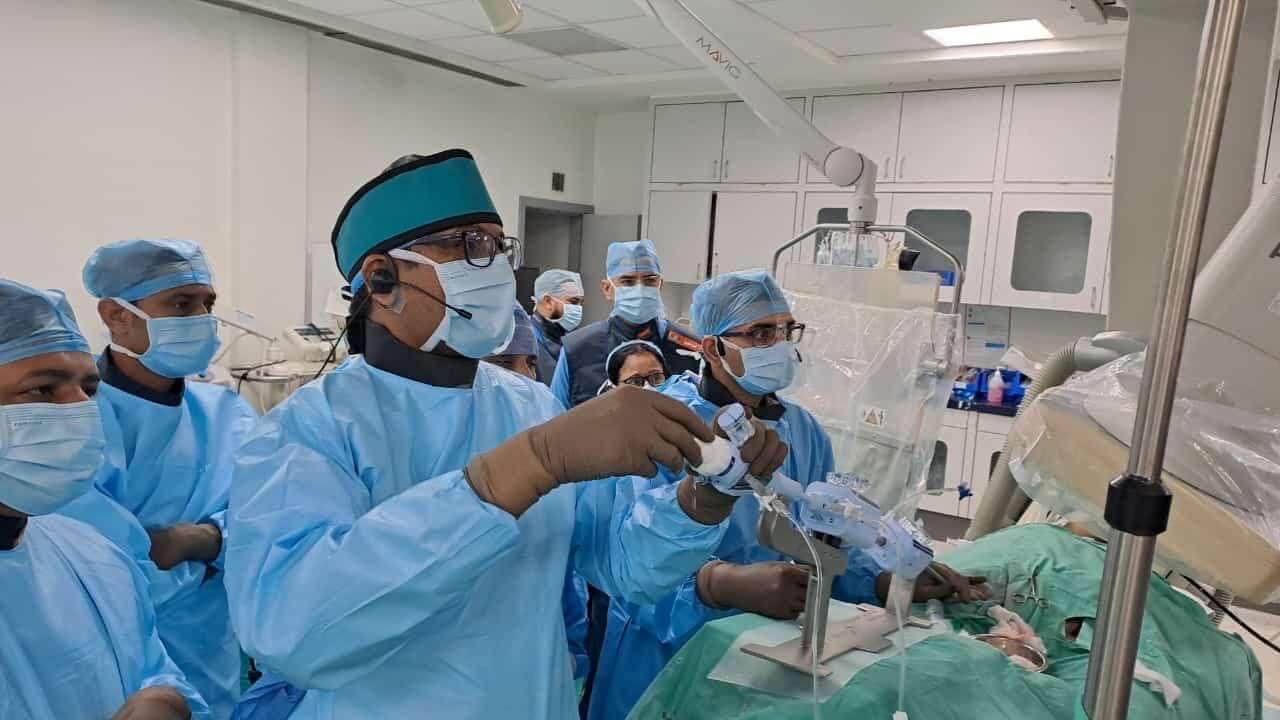
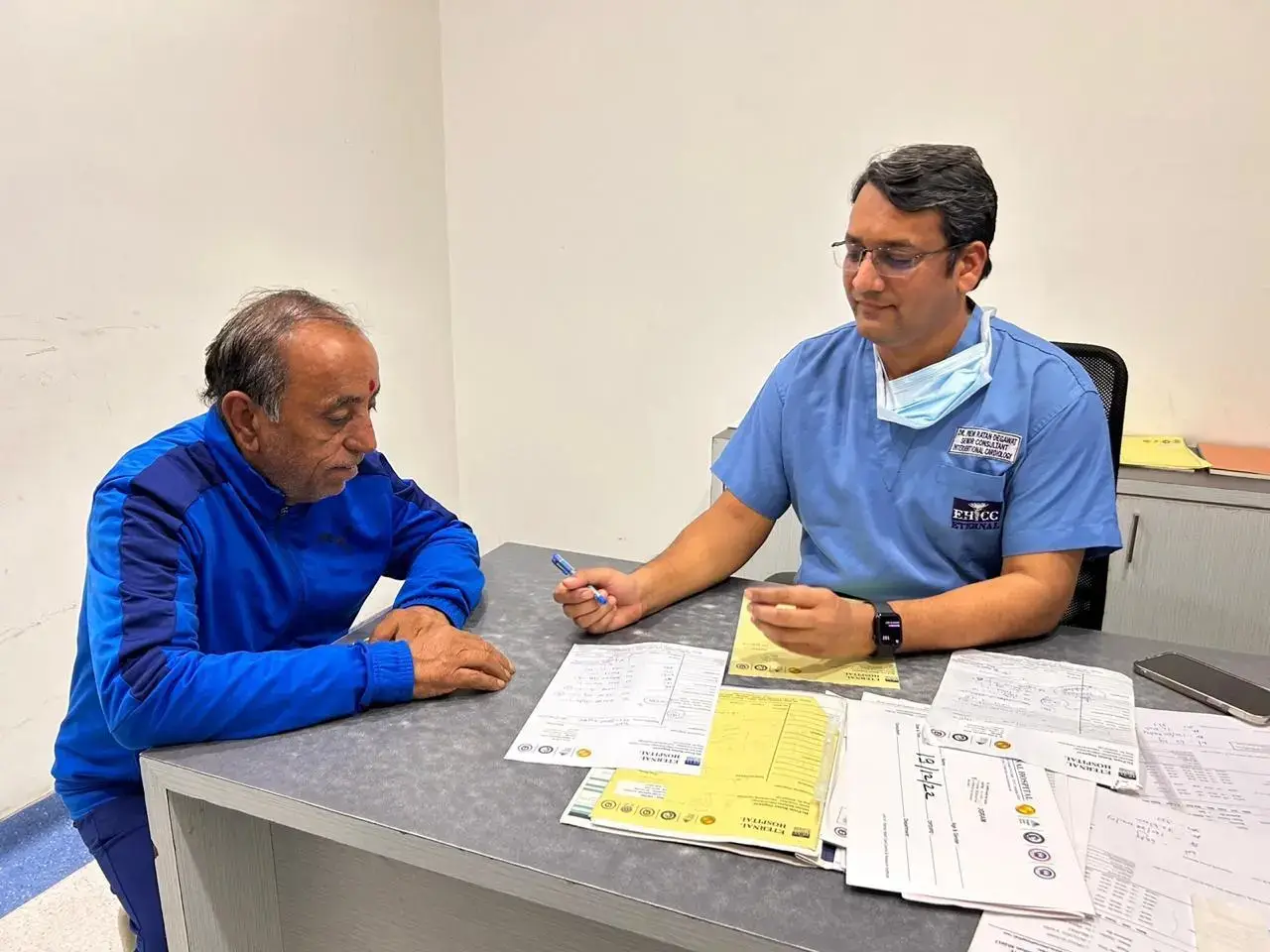


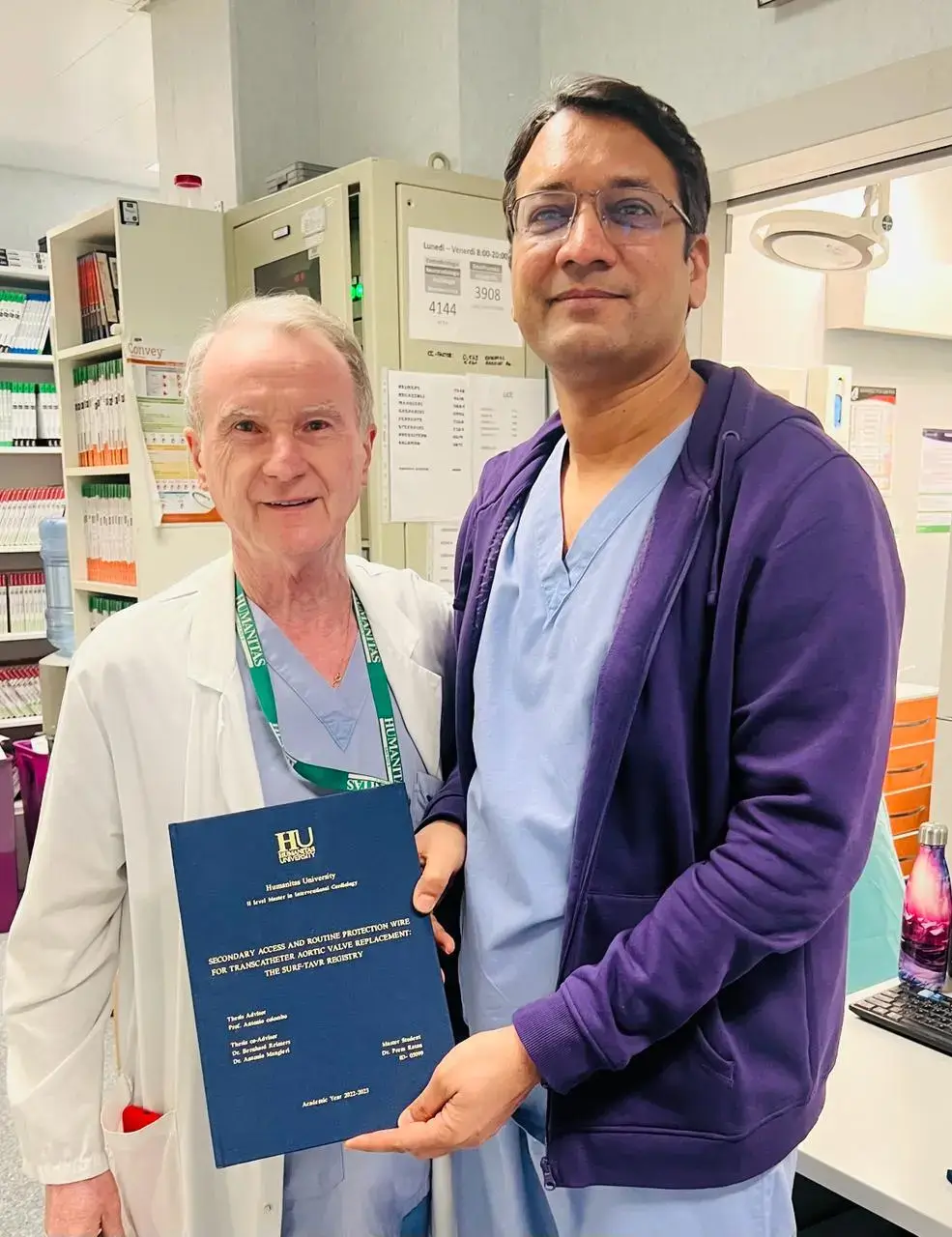


Dr. Prem Ratan Degawat is a highly specialized interventional cardiologist offering comprehensive mitral valve disease treatment using the latest minimally invasive techniques.
Advanced Qualifications & Training:
Academic Excellence:
- D.M. in Cardiology with specialization in complex interventions
- Fellowship in Structural Heart Disease & TAVR from IRCCS Policlinico San Donato, Milan, Italy
- Among the few cardiologists in Rajasthan certified in advanced structural heart procedures
Specialized Treatments Available:
- MitraClip & TriClip Procedures – Edge-to-edge repair for mitral and tricuspid valves
- Transcatheter Mitral Valve Replacement (TMVR) – Valve-in-valve procedures
- Balloon Mitral Valvuloplasty (PMBV) – For mitral stenosis
- TAVR (Transcatheter Aortic Valve Replacement) – Minimally invasive aortic valve treatment
- Complex Coronary Interventions – Multi-vessel disease management
Why Choose Dr. Degawat for Mitral Valve Treatment?
1. Specialized Expertise: Dedicated training in structural heart disease with hands-on experience in advanced European centers
2. Comprehensive Heart Team Approach: Multidisciplinary evaluation by cardiologists, cardiac surgeons, and imaging specialists
3. Minimally Invasive Focus: Prioritizing less invasive options for faster recovery and better outcomes
4. Personalized Treatment Plans: Each patient receives customized care based on their specific condition and overall health
5. Advanced Technology: Access to cutting-edge equipment and latest treatment techniques
6. 24/7 Emergency Care: Round-the-clock availability for urgent cardiac interventions
When to Consult Dr. Degawat:
Seek immediate evaluation if you experience:
- Progressive shortness of breath
- New or worsening fatigue limiting daily activities
- Irregular heartbeat or palpitations
- Swelling in legs or abdomen
- Chest pain or discomfort
- Previous diagnosis of mitral valve disease requiring treatment
- Echocardiogram showing moderate or severe valve disease
Living Well with Mitral Valve Disease
Heart-Healthy Nutrition:
Include:
- Fresh fruits and vegetables (5+ servings daily)
- Whole grains, legumes, and pulses
- Fatty fish rich in omega-3 (twice weekly)
- Low-fat dairy products
Limit:
- Sodium intake (less than 2,000 mg daily)
- Saturated and trans fats
- Caffeine and alcohol
- Processed and fried foods
Physical Activity Guidelines:
Consult your cardiologist before starting any exercise program
Generally Safe Activities:
- Walking (start with 10-15 minutes)
- Light yoga and stretching
- Swimming (once approved)
- Cycling on flat terrain
Avoid:
- High-intensity competitive sports
- Heavy weightlifting
- Isometric exercises (holding positions)
Essential Lifestyle Modifications:
Regular Monitoring:
- Annual or biannual echocardiograms
- Blood pressure checks
- Watch for symptom changes
Medication Adherence:
- Take prescribed medications exactly as directed
- Never stop blood thinners abruptly
- Carry medication list always
Dental Hygiene:
- Inform dentist about valve condition
- May need prophylactic antibiotics before dental procedures
- Maintain excellent oral hygiene
Conclusion
Understanding whether you have mitral regurgitation (leaky valve) or mitral stenosis (narrowed valve) is essential for receiving appropriate treatment. Both conditions can significantly impact your quality of life if left untreated, but modern interventional cardiology offers excellent treatment options with minimal invasiveness.
In Jaipur, Dr. Prem Ratan Degawat provides world-class expertise in diagnosing and treating both conditions using cutting-edge minimally invasive techniques. With specialized international training in structural heart disease and access to advanced procedures like MitraClip, TAVI and TMVR, patients receive comprehensive, personalized care tailored to their specific needs.
Early diagnosis and timely intervention can prevent serious complications and help you return to an active, healthy life. Don’t let valve disease limit your life—seek expert evaluation today.
FAQs
1. Can you have both mitral stenosis and regurgitation simultaneously?
Yes, this is called “mixed mitral valve disease” and commonly occurs in rheumatic heart disease. Treatment strategy depends on which lesion predominates and the severity of each condition.
2. Which condition is more serious—mitral stenosis or regurgitation?
Both can be serious if left untreated. Mitral stenosis progressively restricts blood flow, causing severe fatigue and pulmonary hypertension. Severe mitral regurgitation leads to heart failure and atrial fibrillation. The severity and individual health factors determine the actual risk level.
3. How long can you live with untreated mitral valve disease?
This varies significantly. Mild disease with regular monitoring can be managed for many years. However, severe untreated disease can deteriorate rapidly. Mitral stenosis symptoms typically appear 20-40 years after rheumatic fever, while severe mitral regurgitation may cause symptoms much sooner.
4. Are minimally invasive procedures like MitraClip safe?
Yes, modern minimally invasive procedures have excellent safety profiles. MitraClip procedures show success rates exceeding 95%, with significantly lower complication rates compared to traditional open-heart surgery. Most patients go home within 2-3 days and resume normal activities within 1-2 weeks.
5. Can mitral valve disease be completely cured?
Valve repair or replacement effectively treats the condition, but lifelong follow-up remains essential. Some patients may need additional procedures over their lifetime. Medications and lifestyle modifications continue to play important roles even after successful intervention.
6. What’s the recovery time after balloon mitral valvuloplasty?
Most patients experience immediate symptom improvement. Hospital stay is typically 1-2 days, with return to normal activities within 1 week. This is significantly faster than the 6-8 weeks needed after open-heart surgery.
7. Does health insurance cover mitral valve procedures in India?
Yes, most health insurance policies in India cover mitral valve procedures, including advanced treatments like MitraClip, TMVR, and balloon valvuloplasty. Coverage typically ranges from ₹3-7 lakhs depending on your policy. Always verify specific coverage details with your insurance provider before treatment.
Medical Disclaimer: This article is for informational purposes only and does not constitute medical advice. Always consult qualified healthcare professionals for diagnosis and treatment of heart valve conditions.