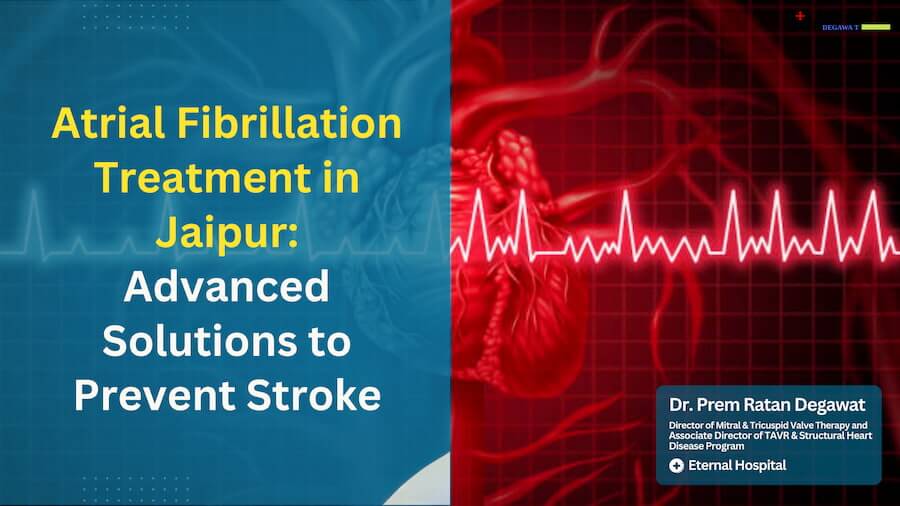
Atrial fibrillation increases your stroke risk by five times. But advanced treatments in Jaipur can protect you. If you have AFib or suspect it, understanding your options could save your life.
In India, millions live with atrial fibrillation. Many don’t know until they suffer a stroke. Dr. Prem Ratan Degawat, a leading cardiologist in Jaipur, offers the latest AFib treatments to prevent this dangerous complication.
What is Atrial Fibrillation?
AFib is when your heart beats irregularly. The upper chambers (atria) quiver instead of beating normally. This causes blood to pool in your heart. When blood pools, clots can form. These clots can travel to your brain and cause a stroke.
Think of your heart like a pump. Normally, it pumps smoothly. With AFib, the pump becomes chaotic and inefficient.
The AFib-Stroke Connection
AFib increases stroke risk by five times. Even worse, AFib-related strokes are often more severe than other strokes.
Here’s why: When your heart doesn’t beat properly, blood collects in a small pouch called the left atrial appendage. This stagnant blood forms clots. If a clot breaks loose, it travels to your brain and blocks blood flow.
AFib causes about one-third of all ischemic strokes. Many people don’t know they have AFib until stroke happens.
Symptoms You Shouldn’t Ignore
AFib symptoms include:
Heart symptoms:
- Heart palpitations or fluttering
- Irregular pulse
- Chest discomfort
- Racing heartbeat
General symptoms:
- Unusual fatigue
- Dizziness
- Shortness of breath
- Getting tired easily during activities
Stroke warning signs:
- Sudden weakness on one side
- Trouble speaking
- Vision problems
- Severe headache
- Loss of balance
If you have sudden stroke symptoms, call emergency services immediately. Every minute counts.
Modern Treatment Options
1. Blood Thinners (Anticoagulation)
Blood thinners are your first defense against stroke. They don’t fix the irregular rhythm, but they prevent clots from forming.
Modern blood thinners like rivaroxaban and apixaban are convenient. No frequent blood tests needed. Fewer diet restrictions. They reduce stroke risk by 60-70%.
2. Catheter Ablation
Catheter ablation corrects the heart rhythm at its source. This minimally invasive procedure uses thin tubes inserted through blood vessels.
The doctor creates tiny scars in specific heart areas. These scars block the faulty electrical signals causing AFib.
Benefits:
- Reduces or eliminates AFib episodes
- Lowers stroke risk by 37%
- Improves quality of life
- May reduce medication need
- Most effective for intermittent AFib
Dr. Degawat performs advanced catheter ablation with extensive experience in complex cases.
3. Left Atrial Appendage Occlusion (LAAO)
LAAO Treatment is perfect for patients who cannot take blood thinners. Since most clots form in the left atrial appendage, closing it prevents strokes.
A small device is inserted via catheter to seal the appendage permanently. No need for lifelong blood thinners.
Who benefits:
- High bleeding risk patients
- Those who had bleeding on blood thinners
- People who cannot take anticoagulants
Studies show LAAO is as effective as blood thinners for stroke prevention.
4. Lifestyle and Medical Management
Complete AFib care includes:
- Medications to control heart rate
- Blood pressure control
- Diabetes management
- Weight loss if needed
- Treating sleep apnea
- Limiting alcohol
- Quitting smoking
These changes significantly reduce AFib episodes.
Why Early Treatment Matters
Don’t wait. The longer AFib goes untreated, the harder it becomes to control.
Over time:
- Your heart changes structure
- AFib episodes become more frequent
- Stroke risk increases each year
- Heart failure risk grows
Early treatment, especially catheter ablation, offers the best chance of maintaining normal rhythm. Research shows early ablation prevents AFib from getting worse.
Dr. Prem Ratan Degawat’s AFib Care
Dr. Degawat offers comprehensive AFib management in Jaipur:
Advanced diagnostics:
- ECG and extended heart monitoring
- Echocardiography
- Complete risk assessment
Personalized treatment:
- Individual risk-benefit analysis
- Latest catheter ablation techniques
- Left atrial appendage occlusion
- Coordinated specialist care
Complete care approach:
- Risk factor management
- Lifestyle guidance
- Patient education
- Long-term monitoring
Take Control Today
Living with AFib doesn’t mean living in fear of stroke. Modern treatments in Jaipur can protect you and improve your life.
Schedule Your AFib Screening
Don’t wait for symptoms to worsen. Early evaluation provides the best outcomes. Contact Dr. Prem Ratan Degawat today for comprehensive AFib assessment and the latest treatment options.
Frequently Asked Questions (FAQs)
1. Can atrial fibrillation be cured?
Catheter ablation can eliminate AFib in many patients, especially those with intermittent AFib. Success rates range from 60-80%. Some patients may need repeat procedures.
2. Do I need blood thinners if I feel fine?
Yes, if your stroke risk is high. AFib strokes happen even without symptoms. Blood thinners reduce stroke risk by 60-70%. Your doctor decides based on your risk score.
3. Is catheter ablation safe?
Yes, when performed by experienced specialists. Major complications occur in less than 1-2% of cases. Benefits usually outweigh risks, especially for symptomatic AFib.
4. How long is recovery after ablation?
Most patients go home the next day. Normal activities resume within a week. Avoid strenuous exercise for 2-4 weeks. Full healing takes about 3 months.
5. Can I stop blood thinners after ablation?
This depends on your stroke risk score and individual factors. Recent research shows some patients may reduce anticoagulation, but never stop without consulting your cardiologist.
6. What is AFib treatment success rate?
Anticoagulation reduces stroke risk by 60-70%. Catheter ablation adds another 37% reduction. Left atrial appendage occlusion reduces risk by 50-60% compared to no treatment.
7. How often should I be monitored?
Initially: visits at 1 month, 3 months, and 6 months. Once stable: annual monitoring is sufficient. You may need periodic ECGs and blood tests.
8. Why choose Dr. Degawat for AFib treatment?
Dr. Degawat is Jaipur’s most experienced interventional cardiologist offering comprehensive AFib care including catheter ablation and LAAO. He combines latest technology with personalized treatment for best outcomes.