Medically reviewed by Dr. Prem Ratan Degawat, MD, DM (Cardiology)
Senior Interventional Cardiologist · Associate Director, TAVR & Structural Heart Disease Program, Eternal Hospital, Jaipur
Last updated on April 4, 2026 · View LinkedIn profile
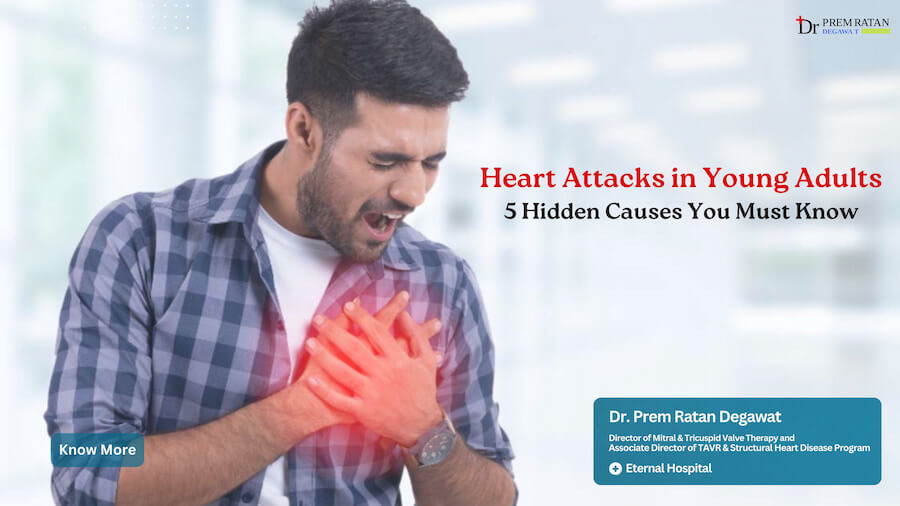
The numbers are worrying. According to the Indian Heart Association, 50% of heart attacks happen in Indian men below 50 and 25% happen below 40.
Recent data shows that 1 in 2 heart attack patients are under 40. Nearly 45% of deaths between 40–69 years are due to heart disease, and studies confirm that Indians develop heart problems about 10 years earlier than people in Western countries.
The American Heart Association also reports that 1 in 4 deaths in India is caused by heart disease, many during the most productive years of life. Clearly, this is no longer an “old-age problem.”
5 Hidden Causes Behind the Rising Heart Attack Epidemic
1. Family History and Early Risks
Some Indians are born with a higher risk of heart disease. Belly fat, high blood pressure, and diabetes appear earlier in Indians compared to other groups. This means problems can begin in the 30s or even earlier.
What you can do:
- Get regular health check-ups if heart disease runs in your family
- Track your waistline: over 90 cm in men, 80 cm in women is risky
- Monitor blood pressure and blood sugar regularly
2. Lack of Daily Movement
Desk jobs, long commutes, and screen time mean most people sit for 8–10 hours a day. Very few get even 30 minutes of exercise. This inactivity makes the heart weak and circulation poor.
What you can do:
- Aim for 30 minutes of brisk walking, 5 days a week
- Take short breaks to stretch or walk every hour at work
- Use stairs instead of lifts whenever possible
3. Stress and Mental Health
Work pressure, traffic, financial worries, and social expectations create long-term stress. This raises blood pressure, disturbs sleep, and leads to unhealthy habits like overeating or smoking.
What you can do:
- Practice deep breathing, yoga, or meditation daily
- Prioritize 7–8 hours of good sleep
- Talk to a counselor if stress feels overwhelming
4. Unhealthy Diet
Traditional Indian meals used to be balanced and wholesome. Today, processed snacks, fast food, sugary drinks, and fried items are common. These foods increase weight, cholesterol, and blood pressure, all of which harm the heart.
What you can do:
- Eat more whole grains, pulses, fruits, and vegetables
- Cut down on packaged foods and sugary drinks
- Cook with less oil and salt
- Follow regular meal timings instead of frequent snacking
5. Pollution and Environment
Air pollution in many Indian cities is several times higher than safe limits. Polluted air enters the lungs and affects blood vessels, silently damaging the heart over time.
What you can do:
- Use masks in high-pollution areas
- Keep indoor air clean with proper ventilation or purifiers
- Avoid outdoor workouts during peak pollution hours
When to Take Heart Symptoms Seriously
Many young people ignore early warning signs, assuming it’s just stress or fatigue. But timely action can save lives.
Seek immediate medical help if you notice:
- Chest pain or pressure lasting more than 10 minutes
- Pain spreading to arms, jaw, neck, or back
- Sudden shortness of breath, nausea, or sweating
- Unexplained fatigue or irregular heartbeat
Get checked early if you have:
- A family history of heart disease
- Diabetes, high BP, or high cholesterol
- Difficulty breathing during normal activities
Prevention Starts with You
Protecting your heart is not about big changes overnight—it’s about small, consistent steps:
- Get regular heart check-ups after 30, or earlier if at risk
- Eat more fresh, home-cooked food
- Stay active and avoid long sitting hours
- Learn to manage stress in healthy ways
- Don’t ignore symptoms
About Dr. Prem Ratan Degawat: TAVI Expert in India
Dr. Prem Ratan Degawat is a leading name in interventional cardiology. As Director of Mitral & Tricuspid Valve Therapy at Eternal Hospital, he specializes in treating complex heart conditions, especially in younger patients.
Expertise:
- TAVI (Transcatheter Aortic Valve Implantation)
- MitraClip and TriClip valve repair
- Complex angioplasty and coronary interventions
- Preventive cardiology and early risk detection
With advanced training from top European centers, Dr. Degawat combines global expertise with patient-centered care, making him a trusted choice for advanced heart treatments in India.
Final Takeaway
Heart disease is no longer just a concern for the elderly. Young Indians are increasingly at risk, but the good news is that prevention is in our hands. Regular health checks, an active lifestyle, balanced diet, stress control, and cleaner environments can go a long way in protecting your heart.